
By John Gruber

WorkOS: How SSO works and the fastest way to add it.
Thoughts and Observations on the MacBook Neo
Wednesday, 4 March 2026
$599. Not a piece of junk.
That’s not a marketing slogan from Apple for the new MacBook Neo. But it could be. And it is the underlying message of the product. For a few years now, Apple has quietly dabbled with the sub-$1,000 laptop market, by selling the base configuration of the M1 MacBook Air — a machine that debuted in November 2020 — at retailers like Walmart for under $700. But dabbling is the right word. Apple has never ventured under the magic $999 price point for a MacBook available in its own stores.
As of today, they’re not just in the sub-$1,000 laptop market, they’re going in hard. The MacBook Neo is a very compelling $600 laptop, and for just $100 more, you get a configuration with Touch ID and double the storage (512 GB instead of 256).
You can argue that all MacBooks should have Touch ID. My first answer to that is “$599”. My second answer is “education”. Touch ID doesn’t really make sense for laptops shared by kids in a school. And with Apple’s $100 education pricing discount, the base MacBook Neo, at $499, is half the price of the base M5 MacBook Air ($1099 retail, $999 education). Half the price.
I’m writing this from Apple’s hands-on “experience” in New York, amongst what I’d estimate as a few hundred members of the media. It’s a pretty big event, and a very big space inside some sort of empty warehouse on the western edge of Chelsea. Before playing the four-minute Neo introduction video (which you should watch — it’s embedded in Apple’s Newsroom post), John Ternus took the stage to address the audience. He emphasized that the Mac user base continues to grow, because “nearly half of Mac buyers are new to the platform”. Ternus didn’t say the following aloud, but Apple clearly knows what has kept a lot of would-be switchers from switching, and it’s the price. The Mac Mini is great, but normal people only buy laptops, and aside from the aforementioned dabbling with the five-year-old M1 MacBook Air and a brief exception when the MacBook Air dropped to $899 in 2014, Apple just hasn’t ventured under $999. “We just can’t ship junk,” Steve Jobs said back in 2007. It’s not that Apple never noticed the demand for laptops in the $500–700 range. It’s that they didn’t see how to make one that wasn’t junk.
Now they have. And the PC world should take note. One of my briefings today included a side-by-side comparison between a MacBook Neo and an HP 14-inch laptop “in the same price category”. It was something like this one, with an Intel Core 5 chip, which costs $550. The HP’s screen sucks (very dim, way lower resolution), the speakers suck, the keyboard sucks, and the trackpad sucks. It’s a thick, heavy, plasticky piece of junk. I didn’t put my nose to it, but I wouldn’t be surprised if it smells bad.
The MacBook Neo looks and feels every bit like a MacBook. Solid aluminum. Good keyboard (no backlighting, but supposedly the same mechanism as in other post-2019 MacBooks — felt great in my quick testing). Good trackpad (no Force Touch — it actually physically clicks, but you can click anywhere, not just the bottom). Good bright display (500 nits max, same as the MacBook Air). Surprisingly good speakers, in a new side-firing configuration. Without even turning either laptop on, you can just see and feel that the MacBook Neo is a vastly superior device.
And when you do turn them on, you see the vast difference in display quality and hear the vast difference in speaker quality. And you get MacOS, not Windows, which, even with Tahoe, remains the quintessential glass of ice water in hell for the computer industry.
I came into today’s event experience expecting a starting price of $799 for the Neo — $300 less than the new $1,099 price for the base M5 MacBook Air (which, in defense of that price, starts with 512 GB storage). $599 is a fucking statement. Apple is coming after this market. I think they’re going to sell a zillion of these things, and “almost half” of new Mac buyers being new to the platform is going to become “more than half”. The MacBook Neo is not a footnote or hobby, or a pricing stunt to get people in the door before upselling them to a MacBook Air. It’s the first major new Mac aimed at the consumer market in the Apple Silicon era. It’s meant to make a dent — perhaps a minuscule dent in the universe, but a big dent in the Mac’s share of the overall PC market.
Miscellaneous Observations
It’s worth noting that the Neo is aptly named. It really is altogether new. In that way it’s the opposite of the five-year-old M1 MacBook Air that Apple had been selling through retailers like Walmart and Amazon. Rather than selling something old for a lower price, they’ve designed and engineered something new from the ground up to launch at a lower price. It’s an all-new trackpad. It’s a good but different display than the Air’s — slightly smaller (13.0 inches vs. 13.6) and supporting only the sRGB color gamut, not P3. If you know the difference between sRGB and P3, the Neo is not the MacBook you want. What Neo buyers are going to notice is that the display looks good and is just as bright as the Air’s — and it looks way better, way sharper, and way brighter than the criminally ugly displays on PC laptops in this price range.
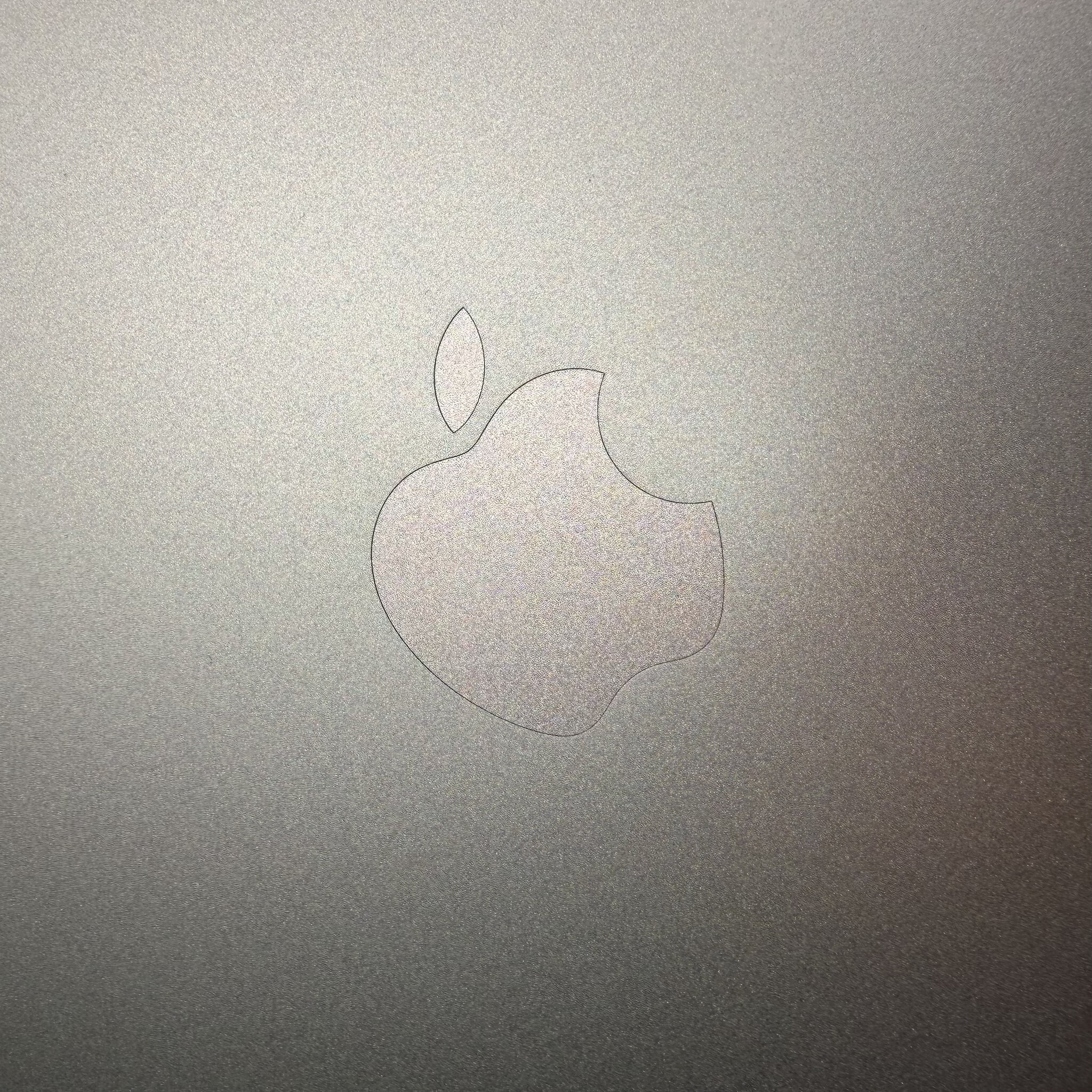
Even the Apple logo on the back of the display lid is different. Rather than make it polished and shiny, it’s simply debossed. Save a few bucks here, a few bucks there, and you eventually grind your way to a new MacBook that deserves the name “MacBook” but starts at just $600.
But of course there are trade-offs. You can use Apple’s Compare page to see the differences between the Neo and Air (and, for kicks, the 2020 M1 Air that until now was still being sold at Walmart). Even better, over at 512 Pixels Stephen Hackett has assembled a concise list of the differences between the MacBook Neo and MacBook Air. All of these things matter, but none of these things are dealbreakers for a $500-700 MacBook. These trade-offs are extremely well-considered on Apple’s part.
I’ll call out one item from Hackett’s 17-item list in particular:
One of the two USB-C ports is limited to USB 2.0 speeds of just 480 Mb/s.
On the one hand, this stinks. It just does. The two ports look exactly the same — and neither is labeled in any way — but they’re different. But on the other hand, the Neo is the first product with an A-series chip that Apple has ever made that supports two USB ports.1 It was, I am reliably informed by Apple product marketing folks, a significant engineering achievement to get a second USB port at all on the MacBook Neo while basing it on the A18 Pro SoC. And while the ports aren’t labeled, if you plug an external display into the “wrong” port, you’ll get an on-screen notification suggesting you plug it into the other port. That this second USB-C port is USB 2.0 is not great, but it is fine.
Other notes:
I think the “fun-ness” of the Neo colors was overstated in the rumor mill. But the “blush” color is definitely pink, “citrus” is definitely yellow, and “indigo” is definitely blue. No confusing any of them with shades of gray.
The keyboards are color-matched. At a glance it’s easy to think the keyboards are all white, but only on the silver Neo are the key caps actually white. The others are all slightly tinted to match the color of the case. Nice!
8 GB of RAM is not a lot, but with Apple Silicon it really is enough for typical consumer productivity apps. (If they update the Neo annually and next year’s model gets the A19 Pro, it will move not to 16 GB of RAM but 12 GB.)
It’s an interesting coincidence that the base models for the Neo and iPhone 17e both cost $600. For $1,200 you can buy a new iPhone and a new MacBook for just $100 more than the price of the base model M5 MacBook Air. (And the iPhone 17e is the one with the faster CPU.)
With the Neo only offered in two configurations — $600 or $700 — and the M5 Air now starting at $1,100, Apple has no MacBooks in the range between $700 and $1,100.
To consider the spread of Apple’s market segmentation, and how the Neo expands it, think about the fact that on the premium side, the 13-inch iPad Pro Magic Keyboard costs $350. That’s a keyboard with a trackpad and a hinge. You can now buy a whole damn 13-inch MacBook Neo — which includes a keyboard, trackpad, and hinge, along with a display and speakers and a whole Macintosh computer — for just $250 more.
-
Perhaps the closest Apple had ever come to an A-series-chip product with two ports was the original iPad from 2010, which in late prototypes had two 30-pin connectors — one on the long side and another on the short side — so that you could orient it either way in the original iPad keyboard dock. ↩︎