By John Gruber
WorkOS: How SSO works and the fastest way to add it.
Linked List: March 14, 2019
Thursday, 14 March 2019
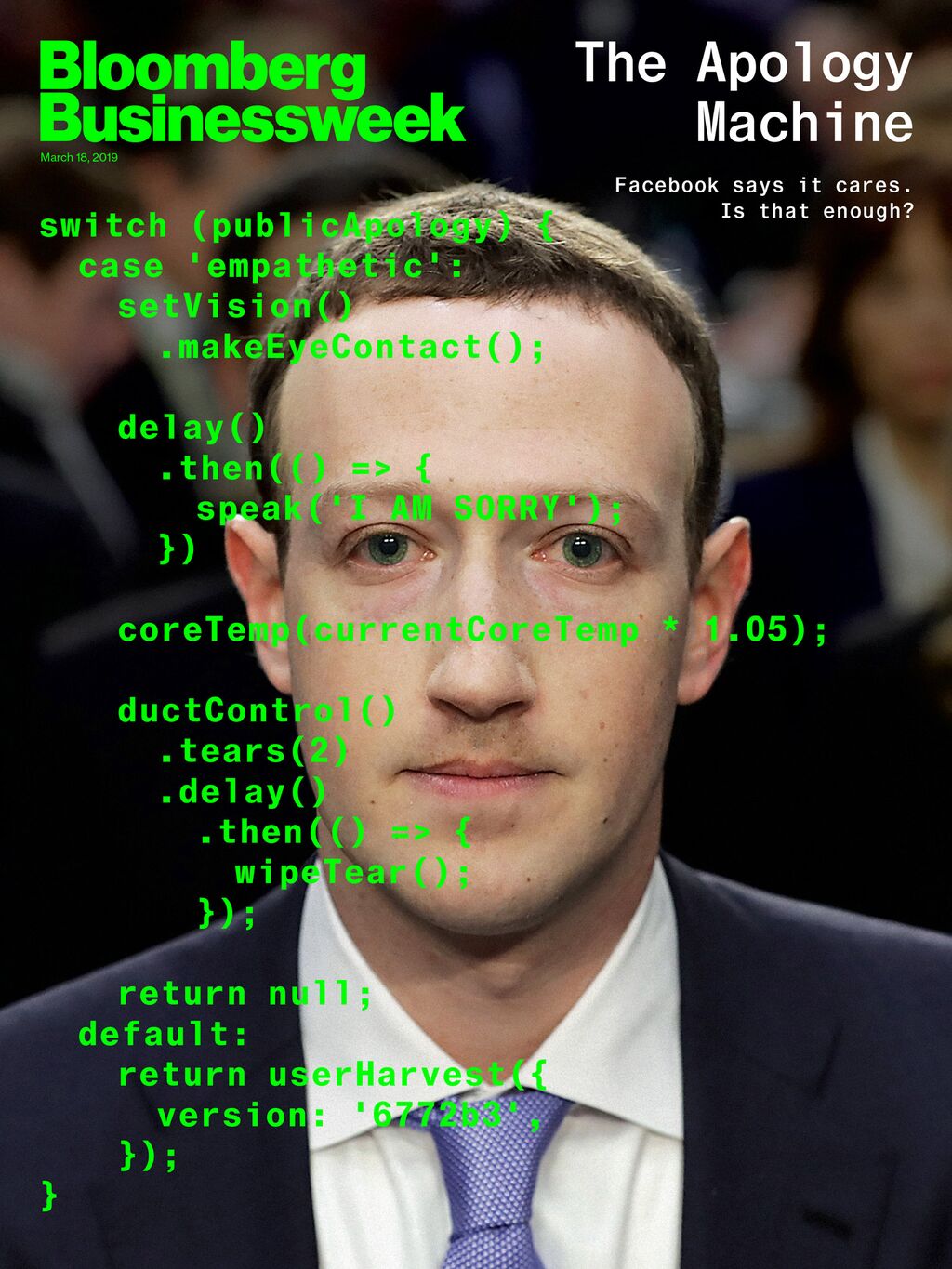
- The Apology Machine ★
-
Sarah Frier, in a cover story for Bloomberg Businessweek*:
Unfortunately, the reporting system they described, which relies on low-wage human moderators and software, remains slow and under-resourced. Facebook could afford to pay its moderators more money, or hire more of them, or place much more stringent rules on what users can post — but any of those things would hurt the company’s profits and revenue. Instead, it’s adopted a reactive posture, attempting to make rules after problems have appeared. The rules are helping, but critics say Facebook needs to be much more proactive.
“The whole concept that you’re going to find things and fix them after they’ve gone into the system is flawed — it’s mathematically impossible,” says Roger McNamee, one of Facebook’s early investors and, now, its loudest critic. McNamee, who recently published a book titled Zucked, argues that because the company’s ability to offer personalized advertising is dependent on collecting and processing huge quantities of user data, it has a strong disincentive to limit questionable content. “The way they’re looking at this, it’s just to avoid fixing problems inherent with the business model,” he says.
I absolutely love the magazine cover. I despise the custom text selection color they’ve chosen for the article on the website, which is — I swear — only 10 percent lighter than the pure black background.
* Bloomberg, of course, is the publication that published “The Big Hack” in October — a sensational story alleging that data centers of Apple, Amazon, and dozens of other companies were compromised by China’s intelligence services. The story presented no confirmable evidence at all, was vehemently denied by all companies involved, has not been confirmed by a single other publication (despite much effort to do so), and has been largely discredited by one of Bloomberg’s own sources. By all appearances “The Big Hack” was complete bullshit. Yet Bloomberg has issued no correction or retraction, and seemingly hopes we’ll all just forget about it. I say we do not just forget about it. Bloomberg’s institutional credibility is severely damaged, and everything they publish should be treated with skepticism until they retract the story or provide evidence that it was true.
- The WWDC 2019 Poster Art Guessing Game ★
-
One fun annual tradition is examining the poster art for WWDC and trying to surmise if it hints at anything that’s going to be announced. I’ll make one guess based on this year’s art: system-wide dark mode in iOS 13.
- WWDC 2019: June 3-7 in San Jose ★
-
Apple Newsroom:
Apple today announced it will host its annual Worldwide Developers Conference in San Jose from June 3 through June 7 at the McEnery Convention Center. Now in its 30th year, Apple’s biggest event will bring together the world’s most innovative and creative developers. […]
Developers can apply for tickets today through March 20 at 5 p.m. PDT through the WWDC website. Tickets are issued through a random selection process, and developers will be notified of their application status by March 21 at 5 p.m. PDT. Developers and Apple enthusiasts everywhere can live-stream the conference on the WWDC app for iPhone, iPad and Apple TV as well as through the Apple Developer website.
No big surprises: same venue, expected dates, same lottery system for tickets.