By John Gruber
npx workos: An AI agent that writes auth directly into your codebase.
Linked List: December 19, 2025
Friday, 19 December 2025
- Adobe Photoshop 1.0 Source Code ★
-
The Computer History Museum:
Thomas Knoll, a PhD student in computer vision at the University of Michigan, had written a program in 1987 to display and modify digital images. His brother John, working at the movie visual effects company Industrial Light & Magic, found it useful for editing photos, but it wasn’t intended to be a product. Thomas said, “We developed it originally for our own personal use … it was a lot a fun to do.”
Gradually the program, called “Display”, became more sophisticated. In the summer of 1988 they realized that it indeed could be a credible commercial product. They renamed it “Photoshop” and began to search for a company to distribute it. About 200 copies of version 0.87 were bundled by slide scanner manufacturer Barneyscan as “Barneyscan XP”.
The fate of Photoshop was sealed when Adobe, encouraged by its art director Russell Brown, decided to buy a license to distribute an enhanced version of Photoshop. The deal was finalized in April 1989, and version 1.0 started shipping early in 1990.
Along with the 1.0 source code (mostly Pascal, with some 68K assembler), CHM has PDFs of Adobe’s excellent Photoshop 1.0 User Guide and Tutorial. CHM trustee Grady Booch, chief scientist for software engineering at IBM Research Almaden, on the source code:
There are only a few comments in the version 1.0 source code, most of which are associated with assembly language snippets. That said, the lack of comments is simply not an issue. This code is so literate, so easy to read, that comments might even have gotten in the way. [...] This is the kind of code I aspire to write.
A little birdie who works at Adobe today told me, regarding the lack of comments, “Let me assure you, that trend continued for the next 35 years.”
Jason Snell, at Six Colors, notes:
The only shame is that this release doesn’t include the code from the MacApp applications library, which Photoshop used and is owned by Apple. It would sure be nice if Apple made that code available as well.
Says my little birdie, “Turns out Adobe got a perpetual license to MacApp and a heavily modified version of it is still the basis of the UI code. It is only recently starting to get replaced. Even more crazy is that parts of that MacApp code are running on iOS and Android and the web versions.”
Quite the legacy for what started as a personal project between two brothers.
- Still No Release Date for Apple TV’s ‘The Savant’ ★
-
Apple TV’s press page has stories this month announcing release dates and first looks for a bunch of shows: Imperfect Women (a “psychological thriller”), Beat the Reaper (“dramedy”), a still-untitled Monarch: Legacy of Monsters spinoff, Widow’s Bay (“blends genuine horror with character-driven comedy”), season 2 of the Idris Elba thriller Hijack, and Margo’s Got Money Troubles, a series from David E. Kelley starring Elle Fanning, Michelle Pfeiffer, Nicole Kidman, and Nick Offerman (good cast!).
But not a word about Jessica Chastain’s The Savant, which was supposed to debut in September, was postponed after the Charlie Kirk shooting (against Chastain’s wishes), and has been in “At a later date” scheduling limbo ever since.
- Anonymous Reddit Tipster Cracked the Brown University and MIT Shooting Cases ★
-
Alexander Smith and Claire Cardona, NBC News:
Online tipsters have had a mixed record when it comes to providing information about mass casualty incidents. But Rhode Island Attorney General Peter Neronha said this Reddit user “blew the case wide open” after posting about their encounter on Saturday with the suspect.
“I’m being dead serious,” wrote the Reddit user, identified in an affidavit as “John,” three days after the shootings at Brown. “The police need to look into a grey Nissan with Florida plates, possibly a rental.”
- Apple Changes Processor Architectures More Often Than Its Identity Font ★
-
Yesterday I wrote:
For the last 40 years Apple has only gone through three identity fonts: Garamond → Myriad → San Francisco.
DF reader Cameron McKay emailed to observe: “It strikes me that Apple changes CPU architectures (68K → PowerPC → Intel → ARM) more often than identity fonts. They’d sooner re-engineer their products’ deepest technical building blocks than change typefaces. I suspect that’s rare among tech companies.”
I wish I’d thought to mention that yesterday.
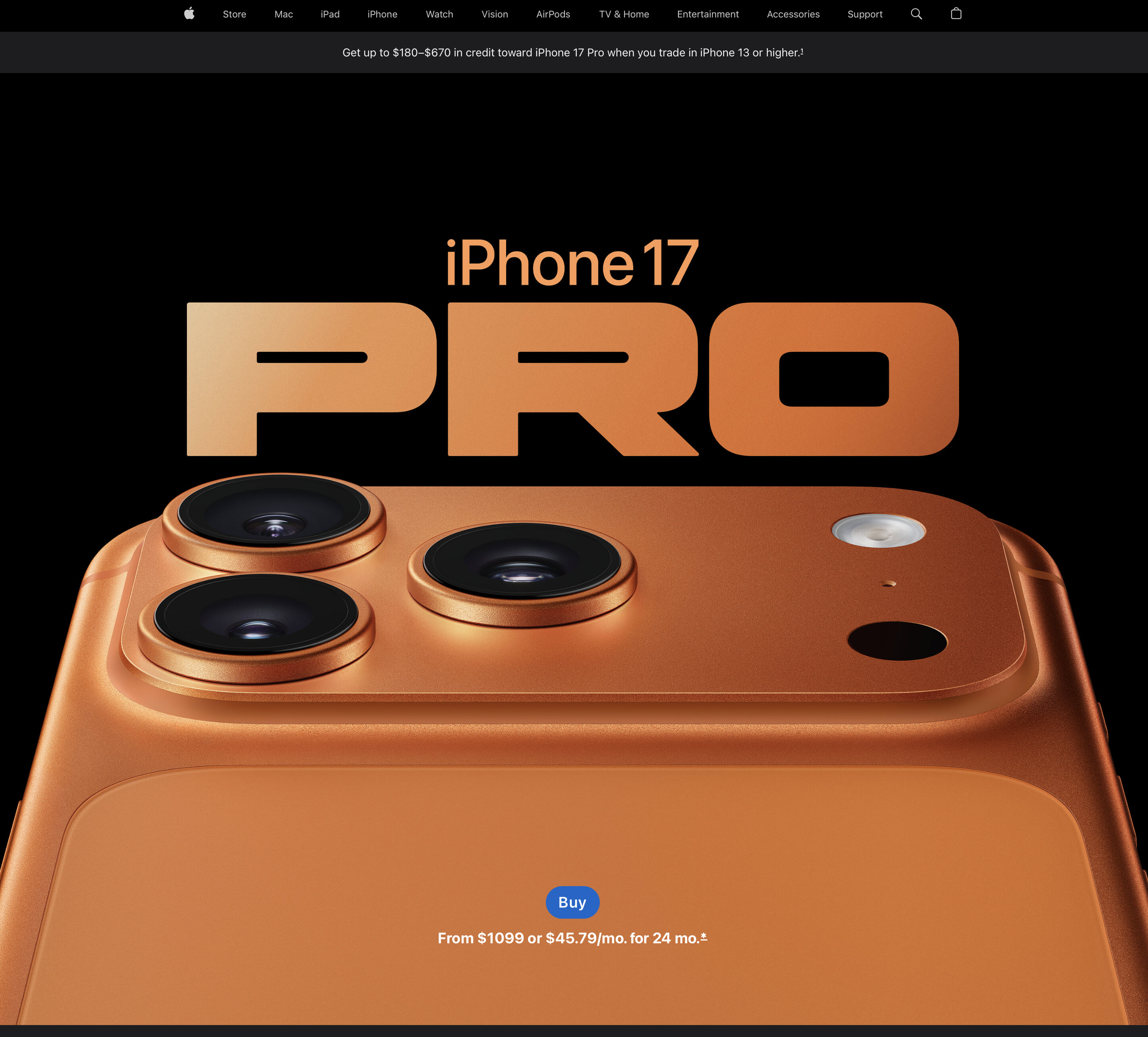
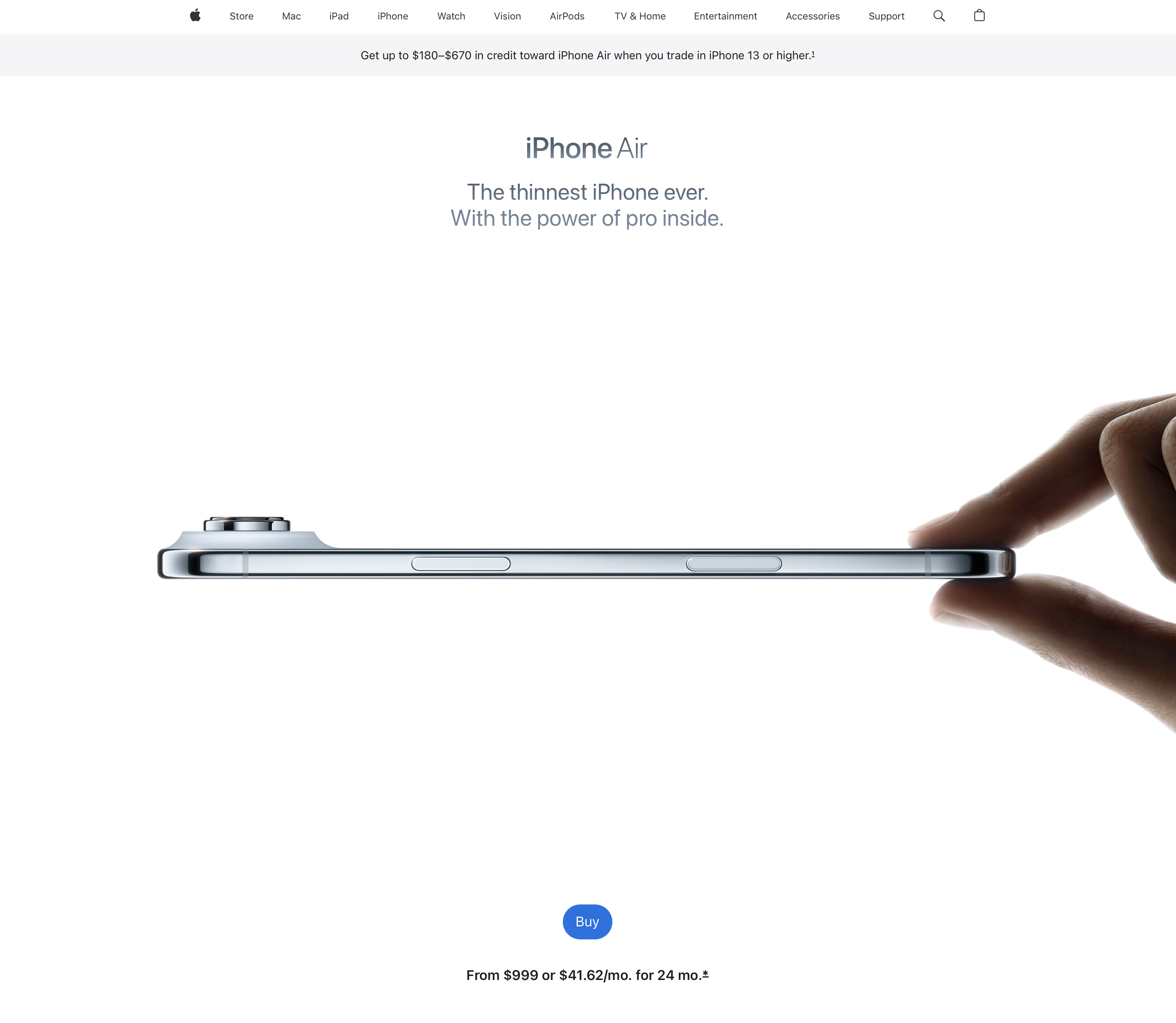
I’ll add that I suspect San Francisco might effectively be Apple’s “forever font”. Forever is a long time, but San Francisco, in its default appearance, strives for the sort of timelessness that Helvetica achieved. And San Francisco offers a wide (no pun intended) variety of widths and weights. This is San Francisco. This is too. (Screenshots for posterity, when Apple’s website changes: iPhone 17 Pro and iPhone Air.)
I also suspect that Apple Silicon is Apple’s “forever architecture”.
- Apple’s 26.2 OS Updates ★
-
Apple released all of its OS 26.2 updates a week ago today. A little unusual for Apple to release OS updates on a Friday, but I think they wanted to get these out before Christmas week. And I don’t think it was rushed — for iOS 26.2 at least, there were two release candidate builds during beta testing. I suspect Apple had hoped to release them earlier.
I know it seemed weird back at WWDC when Apple announced that they were re-numbering all their OS versions to start with 26. But now that the change has settled in for a few months, it seems very natural. It’s so easy now to remember that the current major version for each OS is 26. It’s also easier to talk about new features that span across OSes. And, in the future, when you see a reference to, say, iOS 26, you’ll know exactly when that version came out without having to think, because it’s right there in the version number itself.
A few other notes:
- Juli Clover at MacRumors, as usual, has a great rundown of what’s new across the whole system in iOS 26.2, copiously illustrated with screenshots. Clover notes: “For pop-out menus that expand from a corner button, iOS 26.2 adds a quicker, bouncier animation that looks like the animation that Apple showed off at WWDC.” Popover menus are just one example, but this is actually true for a lot of Liquid Glass details. iOS 26.2 is the first release that visually delivers on most of what Apple showed in the WWDC keynote.
- Zac Hall has another good iOS 26.2 rundown, also illustrated, at 9to5Mac.
- Clover also notes that iOS 26.2, for some users (including me), defaults to a first-run screen that encourages you to turn on automatic OS updates. Pay attention if you don’t want that.
- A list of iPadOS 26.2 changes from Ryan Christoffel at 9to5Mac.
- Nadeem Sarwar at Digital Trends has a good piece showing the new AirDrop code feature, to allow AirDropping with people who aren’t in your contacts for up to 30 days.
- MacOS 26.2 Tahoe changes, from MacRumors and from 9to5Mac.
- Clover on tvOS 26.2, WatchOS 26.2, and VisionOS 26.2.
- Michael Tsai’s roundup of links regarding MacOS 26.2 Tahoe, and for iOS 26.2.
Lastly, iOS 26.2 seems to be the release that Apple is starting to suggest as an upgrade for users who hadn’t already installed it by choice. Be prepared for questions and complaints from non-nerd friends and family who’ve never even heard of “Liquid Glass”.
- Apple Is Adding More Ad Spots to App Store Results ★
-
Apple, on its Apple Ads site:
Search is the way most people find and download apps on the App Store, with nearly 65 percent of downloads happening directly after a search. To help give advertisers more opportunities to drive downloads from search results, Apple Ads will introduce additional ads across search queries. You don’t need to change your campaign in order to be eligible for any new positions. Your ad will run in either the existing position — at the top of search results — or further down in search results. If you have a search results campaign running, your ad will be automatically eligible for all available positions, but you can’t select or bid for a particular one.
The ad format will be the same in any position, using a default product page or custom product page, and an optional deep link. You’ll be billed as usual based on your pricing model: cost per tap or cost per install.
I have a bad feeling about this.