By John Gruber

We’re just out
here a-havin’ fun
In that warm
California sunnn…
Linked List: October 31, 2023
Tuesday, 31 October 2023
- Downplaying the Fact That Apple Shot ‘Scary Fast’ With iPhones ★
-
Jess Weatherbed, writing for The Verge under the headline “Here’s What Apple Really Means When It Says ‘Shot on iPhone’”:
It’s a neat way to promote the recording quality of iPhone cameras, but it’s not like everyday folks can recreate these kinds of results at home unless they happen to own a shedload of ludicrously expensive equipment. The gear shown in the “Scary Fast” behind-the-scenes footage is fairly standard for big studio productions, but Apple’s implication with these so-called “shot on iPhone” promotions is that anyone can do it if only they buy the newest iPhone.
I saw a few folks mocking Apple for this on Mastodon and Threads, too. This is ridiculous. Do these people think that previous Apple keynote films were shot with just a single camera person wielding something like a $40K RED cinema camera and no crew, no lighting, no cranes? That the iPhone “needs help” that traditional cinema cameras do not? I mean, guess what, they used professional microphones too.
Apple occasionally points out that they make all their software — iOS, MacOS, Safari and Webkit, Final Cut, the iWork suite, Photos and Camera … all of it — using Xcode, Swift, Objective-C, and the AppKit, UIKit, and SwiftUI frameworks that they offer free of charge to all developers. Pissing all over Apple for using expensive production sets for their keynote shoots while promoting the fact that they shot it using iPhone cameras is like pissing on Apple’s developer offerings because a lone developer or small team couldn’t create an entire operating system or non-linear professional video editing system.
The whole point is that an iPhone 15 Pro camera is so good that it can fit right in on a high-budget commercial film shoot, and produce world-class results. There’s no implication that a casual user can get results like this by just hitting the shutter button in the iPhone Camera app. That’s why Apple made an entire behind-the-scenes documentary! To show us what it takes to make something look this good.
Why be so cynical? What Apple has accomplished here is extraordinary. They shot a 30-minute film using the same phone cameras they sell to hundreds of millions of people around the world, and the footage looked so good that no one could tell it was shot using iPhones until they told us so.
This is Apple at its best: they make tools for us, using those very same tools themselves.
- The Talk Show: ‘What the Actual’ ★
-
Christina Warren joins the show to talk about Apple’s “Scary Fast” event, introducing the new M3 MacBook Pros and 24-inch iMac.
Sponsored by:
- Nuts.com: The world’s best snacks, delivered fast and fresh.
- Squarespace: Make your next move. Use code talkshow for 10% off your first order.
- ‘The Beauty of Finished Software’ ★
-
Jose M. Gilgado:
Our expectations for software are different from other products we use in our daily lives.
When we buy a physical product, we accept that it won’t change in its lifetime. We’ll use it until it wears off, and we replace it. We can rely on that product not evolving; the gas pedal in my car will always be in the same place.
However, when it comes to software, we usually have the ingrained expectations of perpetual updates. We believe that if software doesn’t evolve it’ll be boring, old and unusable. If we see an app with no updates in the last year, we think the creator might be dead.
- Tailscale ★
-
My thanks to Tailscale for sponsoring last week at DF. Tailscale offers remarkably good ways to manage SSH connections. No more bastions. No more juggling keys. It’s SSH that just works.
Tailscale is completely free of charge to try, and remarkably affordable for use on teams both small and large. Use the Tailscale VS Code extension to remotely edit files on any of your machines. Try Tailscale now.
- The Patent Fight That Could Take Apple Watches Off the Market ★
-
Peter Coy, in a subscriber-only column for The New York Times (I’m using a gift sharing link, which I hope works for all of you):
Apple Inc. sells a lot of smart watches during the holidays, but this year its sales of most Apple Watch models may well drop 100 percent — to literally zero — the day after Christmas.
That’s because of a ruling Thursday by the International Trade Commission that most Apple Watches contain parts that infringe on patents held by Masimo Corp., a producer of medical technology, and its sister company, Cercacor Laboratories Inc., both of Irvine, Calif. An import ban and a cease-and-desist order on sales both take effect on Dec. 26 — unless President Biden reverses the decision by Dec. 25, which appears unlikely. (Presidents rarely overrule the independent, nonpartisan agency, which was founded in 1916 as the U.S. Tariff Commission.) [...]
Apple declined to provide an executive to speak on the record. The company’s position is that Masimo is pursuing a strategy of litigation over innovation, hoping to generate a fresh stream of royalties because royalties from past litigation have dried up. Apple points out that the federal jury that deadlocked in May was 6-to-1 for Apple, indicating that Masimo was a long way from making its case.
This fight is far from over. “My goal isn’t just to beat Apple,” Kiani told me in an interview last summer. “It’s to get Apple to change its ways.”
One way or another, I expect Apple Watch to remain available for sale in the U.S. But that deadline is just two months away.
- Behind the Scenes at ‘Scary Fast’ – Shot With iPhone 15 Pro Max ★
-
Apple Newsroom:
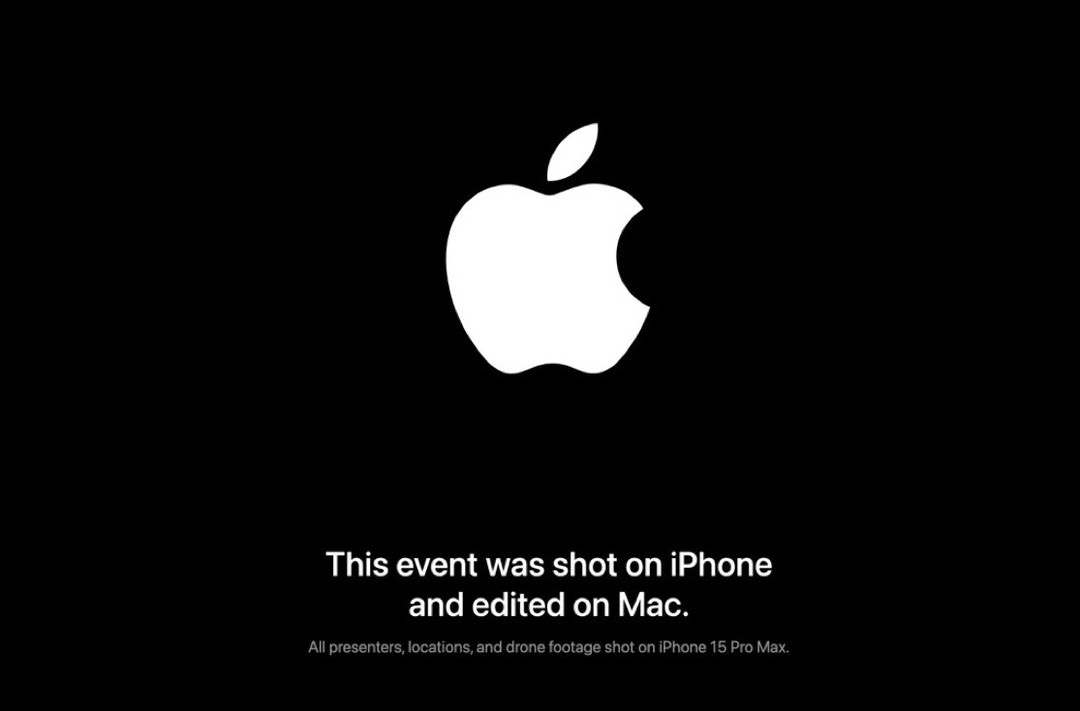
On Monday, October 30, at Apple’s Scary Fast special event unveiling the all-new MacBook Pro with the M3 family of chips and 24-inch iMac with M3, there was an unseen star of the show working behind the scenes. All of the presenters, locations, and drone footage in the event were filmed using iPhone 15 Pro Max, the preferred smartphone for creative pros and filmmakers. Led by documentary film director Brian Oakes, known for the award-winning Jim: The James Foley Story and Living with Lincoln, Scary Fast put iPhone 15 Pro Max right in the middle of the action.
I noticed the credit at the end of the video last night: “This event was shot on iPhone and edited on Mac”, but until I saw that, I never would have guessed that the video was shot on iPhones. It looked every bit as good as Apple’s previous pre-recorded keynotes, which presumably were shot on dedicated professional digital film cameras. To my eyes Apple didn’t sacrifice an iota of image quality.
Even better, the behind-the-scenes documentary is fascinating. Given their cinematic quality, I’ve always assumed these videos were major productions behind the scenes, but now we can see it — everything from lighting, directing, cinematography, sound, set design, talent, crew, editing, color grading — every single aspect of these keynotes aspires to the highest levels of production quality. Not merely “this looks and sounds good for a marketing video”, but “this looks and sounds good for a movie”.
It’s impressive what the iPhone 15 Pro camera is capable of. And it’s really fun that Apple finally took us behind the scenes of one of these keynotes.