By John Gruber

WorkOS: How SSO works and the fastest way to add it.
Linked List: March 12, 2024
Tuesday, 12 March 2024
- Steven Sinofsky: ‘Building Under Regulation’ ★
-
Steven Sinofsky, back on January 27 (two days after Apple announced the first draft of their DMA compliance plans):
This week Apple detailed the software changes that will appear in an upcoming release of iOS to comply with the European Union Digital Markets Act (DMA). As I read the over 60 pages of the DMA when it was passed (and in drafts before that, little of which changed in the process) my heart sank over the complexity of a regulation so poorly constructed yet so clearly aimed at specific (American) companies and products. As I read through many of the hundreds of pages of Apple documents detailing their compliance implementation my heart sank again. This time was because I so thoroughly could feel the pain and struggle product teams felt in clinging to at best or unwinding at worst the most substantial improvement in computing ever introduced — the promise behind the iPhone since its introduction. The reason the iPhone became so successful was not a fluke. Consumers and customers voted that the value proposition of the product was something they preferred, and they acted by purchasing iPhone and developers responded by building applications for iOS. The regulators have a different view of that promise, so here we are.
Sinofsky warns that his essay is long, and it is. At over 18,000 words, it’s veritably booklet-length. But it’s really worth reading. I read it shortly after Sinofsky published it, and have been meaning to comment upon sections at length, but I might as well just link to it. Sinofsky, having been in charge of Windows when Microsoft went through the same sort of European Commission regulatory wringer Apple is now, is in a unique position to expound upon the dynamic. His focus on Apple’s “brand promise” with the iPhone, and how nearly every aspect of the DMA compliance plan breaks — or at least chips away at — that promise, is spot on.
The whole point of the DMA is the EC asserting that they know better than Apple (and Google) how phones should work.
- App Store WTF of the Week: DealMachine for Real Estate ★
-
[Update, 20 March: Turns out that DealMachine was exempt from being required to use IAP, ostensibly because physical products/goods are sold as part of their subscription. But, as of this update, DealMachine is now using IAP. Original post below.]
Message from a DF reader:
I came across an app that’s getting away with directly linking to a website to start a subscription instead of IAP. It’s a straightforward violation of App Store rules in the US. If you look at reviews, a lot of people complain about fraudulent charges and not being able to cancel. But apparently Apple hasn’t stopped them yet.
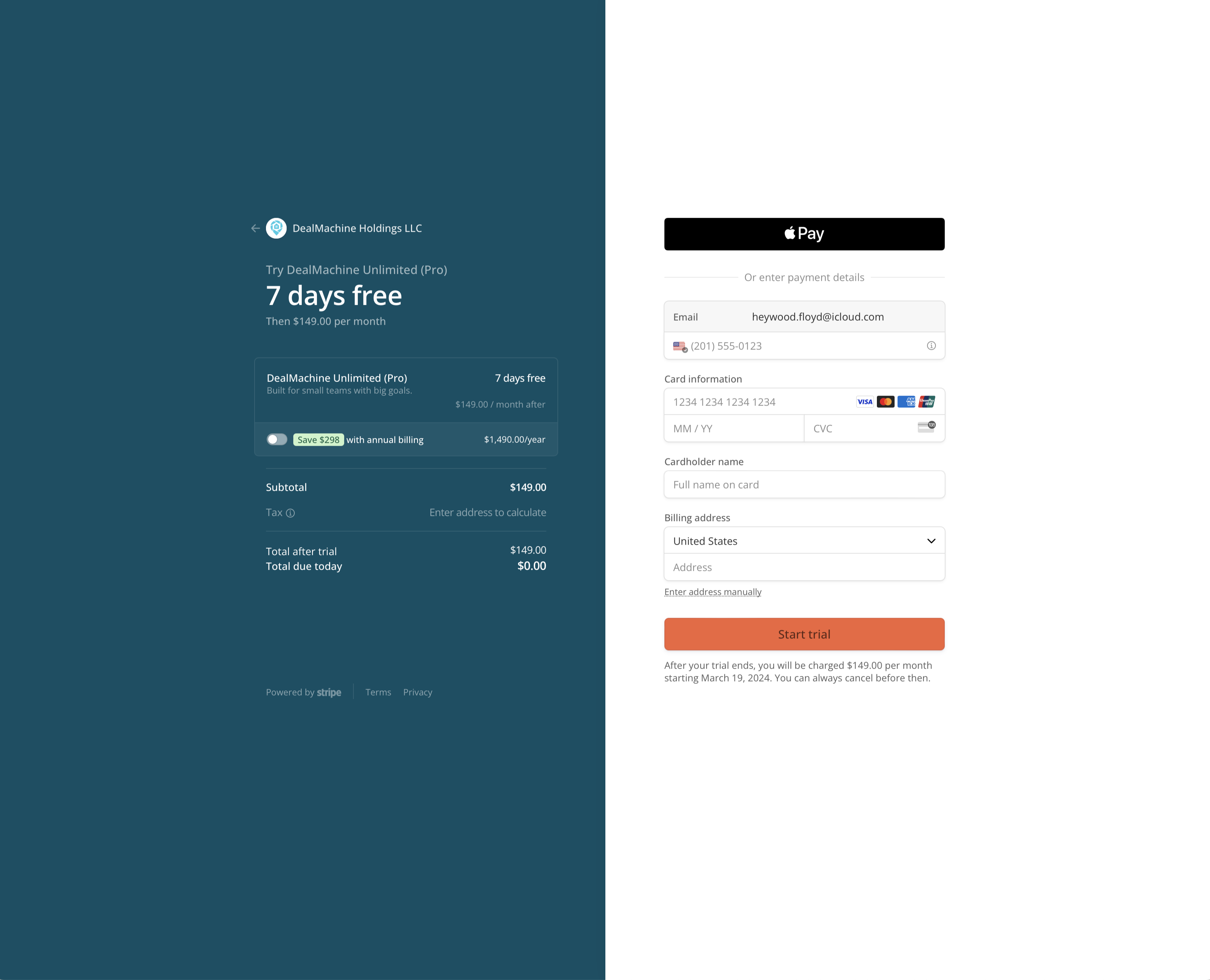
I downloaded the app and signed up; immediately after confirming your email address, you get sent to a screen in the app where you choose from account tiers to begin a free trial. The lowest tier is $100/month, the highest is $500/month. And after making your selection, you get sent to this page on DealMachine’s website to pay using Stripe. (That link won’t actually work, because I omitted the tracking code portion of the URL for the throwaway account I created, so here’s a screenshot.) Not only are they circumventing in-app payments, they don’t even offer using them as a choice.
Here’s a review from their App Store Listing:
No Customer Support / Rough
Their annual plan is over a thousand dollars. I haven’t used their service in months. The renewal comes around, they charge me another thousand dollars. I reach out to get a refund, all I get is a robot.I don’t think DealMachine is a scam. Stripe is as legit as it gets. But when you handle payments on your own, you handle refunds and subscription cancellations on your own too. Renewal reminders too. And if you don’t send renewal reminders, customers don’t get them. And if you don’t feel like issuing a refund for a $1,000/year subscription that a customer wanted to cancel but didn’t, you can let the customer sort it out with their credit card company. All that stuff works awesome, from the user’s perspective, with Apple’s App Store payment system. So DealMachine offers a taste of what our friends in the EU may be getting from marketplace apps soon.