
By John Gruber
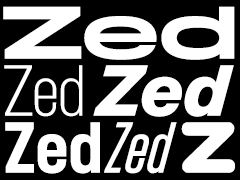
Zed — A font superfamily with extraordinary number of styles and extraordinary language support.
Linked List: June 13, 2024
Thursday, 13 June 2024
- Wayne Ma Confirms That Mark Gurman Scooped Him on the No-Cash Apple-OpenAI Deal ★
-
Wayne Ma, reporting for The Information:
Neither Apple nor OpenAI are paying each other to integrate ChatGPT into the iPhone, according to a person with knowledge of the deal. Instead, OpenAI hopes greater exposure on iPhones will help it sell a paid version of ChatGPT, which costs around $20 a month for individuals. Apple would take its 30% cut of these subscriptions as is customary for in-app purchases.
Sometime in the future, Apple hopes to strike revenue-sharing agreements with AI partners in which it gets a cut of the revenue generated from integrating their chatbots with the iPhone, according to Bloomberg, which first reported details of the deal. OpenAI leaders have privately said the Apple arrangement could be worth billions of dollars to the startup if things go well, The Information previously reported.
I enjoy how Ma threw in a link to his own report from two weeks ago, but didn’t link to Gurman’s scoop — posted a full day earlier — at Bloomberg. Classy.
- Gurman: Neither Apple Nor OpenAI Are Paying for Partnership ★
-
Mark Gurman, writing at Bloomberg*:
Left unanswered on Monday: which company is paying the other as part of a tight collaboration that has potentially lasting monetary benefits for both. But, according to people briefed on the matter, the partnership isn’t expected to generate meaningful revenue for either party — at least at the outset.
The arrangement includes weaving ChatGPT, a digital assistant that responds in plain terms to information requests, into Apple’s Siri and new writing tools. Apple isn’t paying OpenAI as part of the partnership, said the people, who asked not to be identified because the deal terms are private. Instead, Apple believes pushing OpenAI’s brand and technology to hundreds of millions of its devices is of equal or greater value than monetary payments, these people said.
Meanwhile, Apple, thanks to OpenAI, gets the benefit of offering an advanced chatbot to consumers — potentially enticing users to spend more time on devices or even splash out on upgrades.
Apple getting this free of charge, in exchange only for the prestige of showing the ChatGPT logo and credit to users of Apple devices who engage the integration, is the Apple-iest negotiation in recent memory. My money says Eddy Cue, Steve Jobs’s favorite co-negotiator, made the deal. (I’d love to take Eddy Cue with me to the dealer when next I buy a car.)
During my show Tuesday night, I asked Federighi, Giannandrea, and Joswiak point blank, “So, who’s paying who in this deal?” (or something to that effect — transcript isn’t done yet), and got nothing more than smiles and shrugs in response. My read on the smiles is that they were smug happy smiles.
Ben Thompson and I recorded today’s episode of Dithering — the world’s favorite 15-minute podcast — yesterday before Gurman’s report dropped, but speculating, we came to the same conclusion, that it seemed likely neither company was paying the other. It makes obvious sense from Apple’s perspective. Not so obvious from OpenAI’s. But if OpenAI’s overriding goal is to cement itself as the leader in world-knowledge LLMs — to become to chatbots what Kleenex is to facial tissues — it makes sense to agree to this just to gain users, some of whom will upgrade to paid accounts. Google, on the other hand, probably wants to be paid by Apple to integrate Gemini. But now Apple can turn to Google — and Anthropic and Mistral and whoever else wants in on this iOS and MacOS integration, like the other default search engines in Safari — and Eddy Cue can tell them “My offer is this: nothing. Not even the $20,000 for the gaming license, which I would appreciate if you would put up personally.”
Back to Gurman:
ChatGPT will be offered for free on Apple’s products, but OpenAI and Apple could still make money by converting free users to paid accounts. OpenAI’s subscription plans start at $20 a month — a fee that covers extra features like the ability to analyze data and generate more types of images.
Today, if a user subscribes to OpenAI on an Apple device via the ChatGPT app, the process uses Apple’s payment platform, which traditionally gives the iPhone maker a cut.
Not traditionally. Always. Apple always takes a cut. One of my few regrets from my interview Tuesday night is not thinking to ask, on stage, whether iOS and Mac users will be able to upgrade from free to paid ChatGPT accounts right in Settings, where, I presume, the ChatGPT account sign-in will be. If so, Apple will surely be getting their 30/15 percent slice of that. And what’s the alternative? Sending users to OpenAI’s website, where Apple would get zilch? That doesn’t sound like Apple.
* Bloomberg, of course, is the publication that published “The Big Hack” in October 2018 — a sensational story alleging that data centers of Apple, Amazon, and dozens of other companies were compromised by China’s intelligence services. The story presented no confirmable evidence at all, was vehemently denied by all companies involved, has not been confirmed by a single other publication (despite much effort to do so), and has been largely discredited by one of Bloomberg’s own sources. By all appearances “The Big Hack” was complete bullshit. Yet Bloomberg has issued no correction or retraction, and their only ostensibly substantial follow-up contained not one shred of evidence to back up their allegations. Bloomberg seemingly hopes we’ll all just forget about it. I say we do not just forget about it. Everything they publish should be treated with skepticism until they retract “The Big Hack” or provide evidence that any of it was true.
- ‘The Shamans and the Chieftain’ ★
-
Timothy Snyder:
The political theory of Trump’s coup attempt is that all that matters is the chieftain. He does not have to win an election, because the chieftain has the right to rule simply because he is the chieftain. Requiring Trump to win an election is thus a provocation. The claim that he should leave office when he loses an election justifies revenge. And of course retribution is Trump’s platform.
The legal theory of Trump’s coup attempt, made explicit in argument before the Supreme Court, is that the chieftain is immune to law. There is magic around the chieftain’s person, such that he need respond only to himself. The words “presidential immunity” are an incantation directed to people in black robes, summoning them to act as the chieftain’s shamans and confirm his magical status.
No issue has ever been more important in the history of the United States, and thus, in the history of democracy itself: Donald Trump lost the election in 2020 and tried, ham-fistedly, to spearhead a coup to remain in power by overthrowing the duly elected government of the nation. If he gets another chance by winning in November, the next coup won’t be as ham-fisted.
- This Is Love ★
-
What a photo. Reminds me of my own father, and the father I try to be myself. Impossible to imagine the former guy expressing such genuine love like this.
- ‘Apple Aggregates AI’ ★
-
Ben Thompson:
So what is Apple Intelligence, then? To me the explanation flows directly from Strategy 101: Apple Intelligence is the application of generative AI to use cases and content that Apple is uniquely positioned to provide and access. It is designed, to build on yesterday’s Article, to maximize the advantages that Apple has in terms of being the operating system provider on your phone; and, on the other hand, what it is not is any sort of general purpose chatbot: that is where OpenAI comes in — and only there. […]
To put it another way, and in Stratechery terms, Apple is positioning itself as an AI Aggregator: the company owns users and, by extension, generative AI demand by virtue of owning its platforms, and it is deepening its moat through Apple Intelligence, which only Apple can do; that demand is then being brought to bear on suppliers who probably have to eat the costs of getting privileged access to Apple’s userbase.
It pains me to admit how great a take this is. Nailed it.