By John Gruber
WorkOS: How SSO works and the fastest way to add it.
Linked List: March 2, 2015
Monday, 2 March 2015
- PCWorld: ‘Microsoft, Intel Join Forces on Low-Cost Windows 10 Phones’ ★
-
Imagine going back in time 10 years and trying to convince someone that this headline from 2015 would produce nothing but yawns and eye-rolling.
- Apple Found Its Newest Billboards on the Internet ★
-
Brendan Klinkenberg, writing for Buzzfeed:
Last December, when the Bay Area had one of its rare rainy days, Cielo de la Paz took her kids out to play. She’s an avid photographer, “willing to wake up at five in the morning and hike 10 miles to get that shot of the sunrise,” and when she saw the reflection of her red umbrella on the wet concrete, she knew she had a good one.
“It took a few shots,” she said, “this was the last one I took, I was finally happy with how the wind arranged the leaves for me.”
She edited the shot with Filterstorm Neue, uploaded the picture to Flickr (she was taking part in the photo365 challenge), where Apple found it.
Then, they put it on a billboard.
- On Raising the Price for Vesper ★
-
Jason Snell asked me a few questions about our decision to raise the price of Vesper:
Instead, we want to embrace the users who are looking for the best app, and who are willing to pay a fair price for it if they think Vesper might be it. Going low didn’t work; we lose nothing by trying to go high.
I would like to see other developers follow.
What I see is that among long-time Mac indie developers, almost all of them are still making the majority — often the vast majority, sometimes the entirety — of their revenue from Mac apps. That’s good business — the Mac market is willing to pay reasonable prices for apps. But it’s a lost opportunity for iOS as a platform. I think we’re lacking for good, deep quality apps on iOS.
- Jony Ive’s Newton ★
-
Another funny bit regarding Mark Wilson’s calling the Apple Watch “Jonathan Ive’s Newton” — the actual Newton 110 was Jony Ive’s Newton.
- ‘Becoming Steve Jobs’ — New Book by Brent Schlender and Rick Tetzeli ★
-
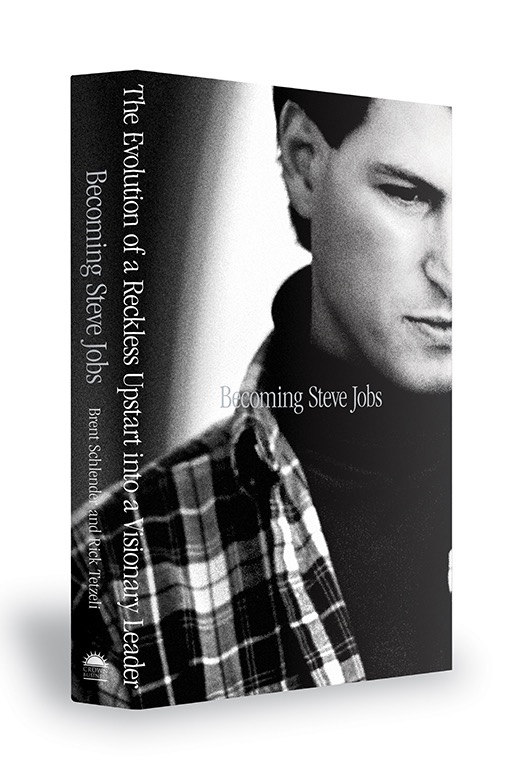
Becoming Steve Jobs is a remarkable new book by Brent Schlender and Rick Tetzeli. Crown Publishing Group was gracious enough to send me an advance copy a few weeks ago, and I am delighted to be the first to announce it.
It is, in short, the book about Steve Jobs that the world deserves. You might wonder how such a book could be written without Jobs’s participation, but effectively, he did participate. Schlender, in his work as a reporter for The Wall Street Journal and Fortune, interviewed Jobs extensively numerous times spanning 25 years. Remember the 1991 joint interview with Jobs and Bill Gates? That was Schlender. As the book makes clear, Jobs and Schlender had a very personal relationship.
The book is smart, accurate, informative, insightful, and at times, utterly heartbreaking. Schlender and Tetzeli paint a vivid picture of Jobs the man, and also clearly understand the industry in which he worked. They also got an astonishing amount of cooperation from the people who knew Jobs best: colleagues past and present from Apple and Pixar — particularly Tim Cook — and his widow, Laurene Powell Jobs.
The book is an accurate, engaging retelling of the known history of Jobs’s life and career, but also contains a significant amount of new reporting. There are stories in this book that are going to be sensational. (I’ve promised to keep them to myself for now.) I’ll have much more to say about the book when it comes out, but for now, take my word for it and pre-order your copy now. It even has a great cover. Becoming Steve Jobs is going to be an essential reference for decades to come.
- Mark Wilson: ‘You Guys Realize the Apple Watch Is Going to Flop, Right?’ ★
-
Kudos to Fast Company’s Mark Wilson for having the stones to predict, boldly, that “Apple Watch is going to flop”, calling it “Jonathan Ive’s Newton”. Pretty sure he has a bad read on the battery life though:
There’s only so much you can do with sapphire glass [sic] and power-efficient microprocessors. Current reports say the Apple Watch could burn out in times as short as 2.5 hours before needing a recharge. Best-case scenarios (you know, when you use it a lot less), might stretch its life to 19 hours. But a loyal user of the Apple Watch would be forced to take it off and recharge it four times during a workday. That’s absurd.
It would be absurd, which is why it’s not true. Wilson links to a CNBC report for that “2.5 hours” figure, but CNBC’s source is this original report by Mark Gurman at 9to5Mac. Gurman reported:
Apple initially wanted the Apple Watch battery to provide roughly one full day of usage, mixing a comparatively small amount of active use with a larger amount of passive use. As of 2014, Apple wanted the Watch to provide roughly 2.5 to 4 hours of active application use versus 19 hours of combined active/passive use, 3 days of pure standby time, or 4 days if left in a sleeping mode.
Battery life may well be a serious problem for Apple Watch. It’s no surprise that it was and will remain one of the hardest engineering problems on the project. But no one is saying you’re going to have to recharge it every three hours. That’s so dumb it makes one think Wilson is being willfully obtuse so as to bask in the contrarian limelight for a few days.
- Google Backs Away From Requiring Android Lollipop Devices to Be Encrypted by Default ★
-
Andrew Cunningham, writing for Ars Technica:
Last year, Google made headlines when it revealed that its next version of Android would require full-disk encryption on all new phones. Older versions of Android had supported optional disk encryption, but Android 5.0 Lollipop would make it a standard feature.
But we’re starting to see new Lollipop phones from Google’s partners, and they aren’t encrypted by default, contradicting Google’s previous statements. At some point between the original announcement in September of 2014 and the publication of the Android 5.0 hardware requirements in January of 2015, Google apparently decided to relax the requirement, pushing it off to some future version of Android.
Ars’s guess as to why is performance, which seems likely. It just shows how hard it is for Google to move the state of the art forward with Android — everything takes a year, or longer, before hitting the market.