By John Gruber
WorkOS: How SSO works and the fastest way to add it.
Linked List: September 22, 2026
Tuesday, 22 September 2026
- Meta’s Muse Logomark, Designed by Jessica Hische ★
-
Bill McCool, writing at Dieline:
This past Wednesday, lettering artist, designer, and author Jessica Hische took to Threads to announce that she had worked alongside Meta’s team to create the icon and logotype for their agentic AI, Muse. Acknowledging that people would be “mad because it’s AI and Meta,” Hische sought to explain at least why she had taken the gig in the first place. Obviously, she took some flak for working with Meta. While plenty of comments voiced support, just as many chastised her for even considering the project, which I can mostly sum up as a general narrative thread of “How could you?”
FWIW, it’s pretty rich to criticize someone for working with Meta while you’re very much using a Meta product to issue said criticism. But I digress.
I like the Muse mark/icon. It’s both an obvious “M” and yet at the same time, not an “M”. It’s friendly but not un-serious.
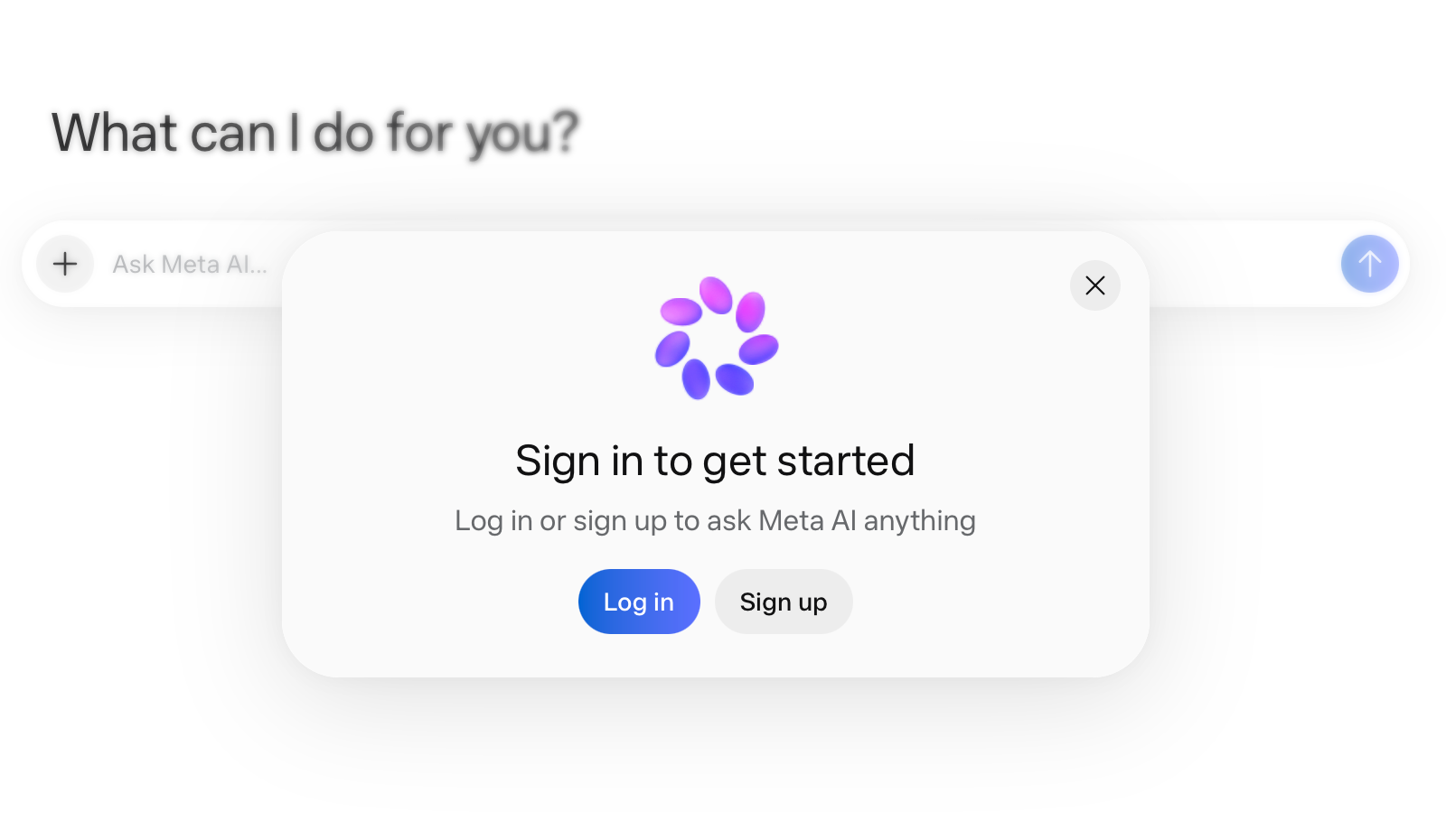
And, as Meta chief AI officer Alexandr Wang noted today on X (not Threads), it doesn’t look like a butthole. (Yet Meta AI’s logo/icon is a little butthole-y.)
- Meta’s New Muse AI Agent Read Jason Aten’s Messages Database ★
-
Jason Aten, writing for Inc:
Then, yesterday, I was having a conversation with my Primary Technology podcast co-host, Stephen Robles, about the new iPhones. Moments later, I got a push notification from Muse suggesting that the conversation we were having would make for a good column and offered to put together research for me to write about. It even flagged a message from my editor about having a column ready for Monday.
Not only had I not asked it to do that sort of thing, I never gave it permission to read my messages. In fact, I remember explicitly choosing not to let it have access to my messages, calendar, and other personal information.
Stranger still was what happened when I asked Muse how it knew.
Like I told Aten on Threads, Muse was right about one thing: it did give him a good idea for a column. Later on, Aten writes:
I also want to be clear about something else: If your response to this is that, of course, Meta would do this — it’s Meta — you are just letting them off the hook. You’re normalizing behavior that should not be normal, and you should not let them off the hook.
My response to this is a little more complex than that. At the top level, this is why I don’t run any AI agents, from any source, on my production/work Macs where all my personal information and communication apps are. And if I eventually do, I’ll pay surgical attention to the permissions I grant them.
But at a second level, I do think “Of course Meta would do this”. If I were going to run an AI agent on my personal Mac today, Meta’s would be among the last I’d choose. They’re the proverbial scorpion and we’re the frogs. I’m genuinely curious about Muse, and might soon try it — but I’ll try it on a machine without most of my data on it. This isn’t “letting them off the hook” — this is keeping Meta on the hook, where they belong.
- Why Didn’t Google Build Muse? ★
-
MG Siegler, writing at Spyglass:
The number one response I’ve gotten to my thoughts on Meta’s Muse personal assistant agent is some variation of “I will never trust Meta with my data.” But the number two response is arguably more interesting (and related): “Why didn’t Google build this?”
The short answer to this is undoubtedly: they’re working on it. But the longer answer is probably more interesting here too.
Siegler’s take is basically that Google lacks focus. They’ve got multiple AI agent products, none of which are hitting — which as he points out has been their decades-long problem with messaging apps. Say what you want about Meta as a company and Mark Zuckerberg as a leader, but they (and he) have focus. I make fun of them (and him) for going all-in on “the metaverse” only to lose all interest in it just a few years later, but to play devil’s advocate, that’s how focus works.
- Amazon Blocks Meta’s Muse AI Assistant ★
-
Todd Bishop, reporting at GeekWire:
Amazon says it has cut off Meta’s new Muse personal AI agent from shopping on Amazon.com on behalf of customers, after attempting unsuccessfully to get the Facebook parent company to voluntarily exclude the e-commerce site from the experience.
The problem, Amazon says, is that it never agreed to any of it. Meta didn’t tell Amazon that Muse would access its store, the agent doesn’t identify itself when it browses, and it appears to capture and store customer credentials, which the company says could create privacy and security risks.
As of Sunday night, people trying to use Muse to shop on Amazon were seeing the popup, “Continued access by an unauthorized AI agent violates Amazon’s Conditions of Use, to which our customers have agreed.”
On the one hand, Muse is software, and Amazon cutting off an unauthorized software client from accessing its store seems like a normal thing for Amazon to do. I suspect Meta has protections in place to prevent other agents from acting as clients for Instagram or Facebook.
But on the other hand, an agent is an agent. If I hired a human personal assistant and told them to buy some stuff at Amazon for me, they’d just do it, and Amazon wouldn’t — and seemingly couldn’t — stop it. How is Muse different than that other than the fact it’s an AI assistant, not a human one? I’m sure Amazon’s answer is that they don’t care about the philosophical debate; they’re not going to sit back and let Meta software spider their store and aggregate purchasing data.
- Meta’s New Muse AI Agent App Overtakes ChatGPT as Top iPhone App ★
-
Zac Hall, writing for 9to5 Mac on Friday:
Meta’s new Muse AI agent app has taken the top spot on the free iPhone charts for the U.S. App Store, displacing OpenAI’s ChatGPT from the first place.
Muse by Meta only launched this month, although the app has been around for a couple of weeks. This means new installs are picking up and boosting the app on the App Store’s top charts beyond the day-one launch.
Just yesterday, Meta expanded Muse app availability to include the Mac. The desktop version of the app doesn’t contribute to the App Store ranking, however, as it’s downloadable from the web.
Four days later and Muse still holds the #1 spot in the U.S. iOS App Store. Here’s the top 15 today (with the full, sometimes insipid, name of each app, and my own commentary in brackets):
- Muse from Meta
- ChatGPT
- Vinted: Pre-loved marketplace [if this crap was loved why did they sell it?]
- StoryReel: Drama Shorts & TV
- Google Gemini
- Polymarket: Trade Live Sports [trading, not gambling!]
- PineDrama — Short Dramas
- TikTok Pro — Events
- Depop — Buy & Sell Clothes
- CapCut: Photo & Video Editor
- Kalshi: Trade Football & more [but the “more” is definitely not gambling!]
- Claude by Anthropic
- The White House
- Threads
Hit apps come and go. Temu had been at or near the top for a long while, but now sits at #20. But ChatGPT has been at or very near the top for years now. Anthropic is on the cusp of a record-breaking IPO based on the strength of its enterprise success. #12 is nothing to sneeze at — clearly, Claude is a consumer hit. But it’s behind Gemini, and all of these apps are typically behind ChatGPT.
The odds are that Muse won’t stay at the top for long. And eventually, ChatGPT will decline in popularity. But Muse is off to a big start. And ChatGPT’s persistence atop the App Store is quite remarkable.
- Xcode 27.2 Now Supports a New JSON Project File Format ★
-
Apple Developer:
Xcode now supports a JSON-based project format (.xcproj) that’s more readable, merge-friendly, and easier for coding agents to edit. Enable it in the file inspector. Projects using .xcproj also open in earlier versions of Xcode 27.
Apple released, on GitHub, a Swift library (and CLI tool) for reading, writing, and manipulating this new project format. Michael Tsai has a list of developer reactions, which are universally positive. A sampling:
Developers have been screaming for a friendlier Xcode project format for years. I’m one of them.
I’ve been waiting for something like this for most of my career! 🎉
It does feel like another case of “we’ve quickly done a thing to help AI that we’ve been unwilling to do for years to help humans.” I’m seeing that happen across the industry.
It is very welcome and appreciated, and lots of thanks to the teams involved. It’s also frustrating that it took “it can help AI” to make it happen.
The old .pbxproj project format was not XML; it was an old NeXT-style “ASCII” property list — a file format that is surprisingly JSON-like considering that it predates not only JSON, but JavaScript (JSON = JavaScript Object Notation). The problem developers have long had with the old .pbxproj project file isn’t about the old plist format, but instead the way the object graph was represented in it. Everything was represented by opaque ID values; one small change in Xcode often resulted in multiple changes on different lines in the .pbxproj file. While technically that format is a human-readable (and thus LLM-readable) text file, it effectively needed to be treated as a binary file.
- Siri AI Class-Action Lawsuit Settlement Website Is Now Live ★
-
Joe Rossignol, MacRumors:
In May, Apple agreed to pay $250 million to settle a U.S. class action lawsuit over Siri AI’s delayed launch, and the settlement website is now live.
Apple will pay an estimated $25 per eligible iPhone to eligible customers, who can submit a claim via the settlement website between September 21 and December 21 of this year. The exact payment may be higher or lower than $25 depending on the total number of valid claims submitted and other factors, with the maximum amount set at $95.
Apple denies all of the allegations made in the lawsuit. Apple agreed to the settlement to avoid the costs and risks of a trial.
I went ahead and filled it out for the iPhone 16 Pro I purchased in September 2024. I’d call it borderline whether it was worth my time for $25. It was a pain in the ass every step of the way.
For the eventual payment, your choices to receive the dough are PayPal, Venmo, ACH (bank transfer), or check. I tried to get it via PayPal and it just wouldn’t complete the connection to my PayPal account. After wasting time on a few tries, I tried ACH next, and the web form had pasting disabled on the fields for the routing and account numbers. Ridiculous. I was able to get around that to paste the numbers in, because I use StopTheMadness. But most people don’t. The only reason I can think of that they try to block pasting on those fields is to make it difficult.