
By John Gruber
WorkOS: How SSO works and the fastest way to add it.
Linked List: December 2025
Wednesday, 31 December 2025
- The Talk Show: ‘2025 Year in Review’ ★
-
A look back at Apple’s 2025, with special guest Rene Ritchie.
Sponsored by:
- Factor: Healthy eating, made easy. Get 50% off your first box, plus free breakfast for 1 year, with code talkshow50off.
- Squarespace: Save 10% off your first purchase of a website or domain using code talkshow.
- Photoshop 1.0 and the Early Macintosh HIG ★
-
After posting a link to the Computer History Museum’s release of the Photoshop 1.0 source code last week, I spent some time paging through the original Photoshop manuals. I found a screenshot of the dialog box where you entered your serial number, and posted it to Mastodon, writing:
If you’re annoyed by something that is obviously wrong about this dialog box from Photoshop 1.0, you’re my type of person. (Even more so if, like me, you remember being annoyed by this at the time, when you were entering your cracked SN.)
What a lovely thread it generated, replete with screenshots from early versions of the HIG.
Sidenote: I would eat my hat if Alan Dye knew what was wrong and gross about this dialog box. This is exactly the sort of sweating the idiomatic usability details thing that has frequently been wrong in Apple software in the last decade. The response from Dye and those in his cohort would be, I’d wager, to roll their eyes with a “Who gives a shit what the UI guidelines were forty fucking years ago?” dismissal. Here’s the thing. Styles have changed as time has marched on. Technical capabilities — screen resolution, color — have marched on. But the fundamental idioms of good Macintosh UI design are timeless (and many of them ought to apply to Apple’s other platforms). These idioms are like grammar. Slang changes. Language forever moves forward. But many important idioms are so fundamental they do not change. Styles and technical advances have advanced over time in filmmaking and print design too, but the basic principles of good cinema and graphic layout are timeless. Only a fool dismisses the collective knowledge passed down by those who came before us.
- ‘The Strange Death of Make America Great Again’ ★
-
Matthew Walther, in an opinion piece last week for The New York Times (gift link):
MAGA’s internal culture has always rewarded theatrical confrontation over achievement. Boorishness commands attention, and boors mistake attention for leverage. Pseudo-martyrdom becomes an end in itself. Loyalty tests proliferate. Those who counsel de-escalation find themselves subject to denunciation; prudential disagreement is allowed to provide cover for rank bigotry. Partisans celebrate one another for exacerbating tensions even when exacerbation forecloses coalition building.
There is also a related problem: The Trumpist movement has generated a lunatic array of semiautonomous online subcultures that are largely indifferent to strategic considerations and immune from political consequences while still exercising influence over actors whose decisions are not so immune. The disappearance of the informal gate-keeping function once performed by conservative luminaries such as William F. Buckley Jr. is probably permanent. In the absence of such authority, informed argument exists alongside phony outrage, profiteering, self-aggrandizement and saying things for the hell of it. The result is not merely the radicalization that Mr. Buckley feared but a kind of omnidirectional incoherence.
“A kind of omnidirectional incoherence” is as perfect a description as I’ve seen regarding the whole Trumpist movement in this second administration.
Tuesday, 30 December 2025
- ‘I’m in Charge at This Hertz Location, and Buddy, You’re Not Getting a Car Today’ ★
-
Emily Delaney, at McSweeney’s:
Okay, now you’re getting upset. You’re getting upset despite the fact that we have strict rules against getting upset at this Hertz location. But tell me, honestly, when you reserved a rental car through Hertz, you thought… what? That we were going to set aside a special little car just for you? Seriously? Oh my god.
(Via Kottke.)
- The U.S. Conservative Aggrieved Mindset, Explained ★
-
Jason Pargin is — well, to my tastes — a master of the TikTok video format. This one is so good, and ends with a mic-drop closing line.
- Using AirPods Live Translation in Japan ★
-
Ruffin Prevost, writing at The New York Times:
As everyone filed out, I repeated, in English, some of the priest’s comments to my guide, Keiko Hatada, who taught English for 30 years and has led custom tours of Tokyo for the past decade. I wanted to make sure I had understood things correctly.
I recounted the priest’s admonition to set aside unwholesome feelings of anger and greed, and work instead to show compassion and generosity, as well as his reminder that his temple was still accepting donations for those affected by the 2011 earthquake and tsunami.
“You told me you didn’t speak Japanese,” my guide said, pleasantly surprised.
Beyond a few basic greetings and food terms, I don’t.
I wrote the following two years ago in my AirPods Pro 2 review:
The new AirPods Pro are the best single expression of Apple as a company today. Not the most important product, not the most complicated, not the most essential. But the one that exemplifies everything Apple is trying to do. They are simple, they are useful, and they offer features that most people use and want. Most people use headphones. A lot of people use them every day — in noisy environments. AirPods Pro are — for any scenario where big over-ear-style headphones are impractical — the best headphones in the world.
That was before Live Translation, a feature that until recently existed only in science fiction.
- ICEBlock App Sues Trump Administration for Censorship ★
-
Bobby Allyn, reporting three weeks ago for NPR:
The developer of ICEBlock, an iPhone app that anonymously tracks the presence of Immigration and Customs Enforcement agents, has sued the Trump administration for free speech violations after Apple removed the service from its app store under demands from the White House.
The suit, filed on Monday in federal court in Washington, asks a judge to declare that the administration violated the First Amendment when it threatened to criminally prosecute the app’s developer and pressured Apple to make the app unavailable for download, which the tech company did in October. [...]
To First Amendment advocates, the White House’s pressure campaign targeting ICEBlock is the latest example of what’s known as “jawboning,” when government officials wield state power to suppress speech. The Cato Institute calls the practice “censorship by proxy.”
Good on developer Joshua Aaron for filing this suit and defending his work.
Sunday, 28 December 2025
- Copilot Money ★
-
My thanks to Copilot Money for sponsoring last week at DF. Copilot is a personal finance app for the iPhone, iPad, and Mac, and they’ve always deeply believed in the value of embracing the design idioms and technical features of truly native apps for Apple platforms. Apple has noticed, awarding Copilot an App Store Editor’s Choice and featuring Copilot earlier this year on Apple Developer for their use of Swift Charts.
Copilot’s big news this week is they’ve launched a new web app, bringing access to Copilot from any device, anywhere. It’s designed with all the attention to detail — and concern for privacy and security — as their native apps.
Copilot Money brings all your spending, budgets, investments, and net worth into one organized dashboard, with intelligent categorization and insights that help you stay on track without spreadsheets or app-hopping. Designed to feel calm and intuitive, Copilot makes it easy to understand your finances across all your devices.
Copilot first sponsored DF back in 2021. My wife and I started using it then to track our finances, and we haven’t looked back. Copilot Money isn’t just better than anything we’d used before, it absolutely blew everything else away. It’s easy to connect to your financial accounts, and once you do, you don’t need to spend any effort at all to enter transactions. Copilot just tracks it all automatically, and most importantly, presents it to you in clear, intuitive ways. It’s so good. I’m not saying that because they sponsored DF last week — I’m saying that as a happy paying customer for over four years now.
Copilot is offering DF readers two months free with code DARING, plus 26% off your first year for a limited time, available through this link.
- SoundSource 6 ★
-
Major update to Rogue Amoeba’s essential audio utility for the Mac. I’ve written about versions 5 and 4 previously, and everything I wrote then remains true. SoundSource remains the system-wide audio menu item that ought to be built into MacOS, giving you easy, intuitive control over every audio device (input and output), and easy, intuitive control over every app in which you play or record audio. That one seemingly-simple app does both those things is quite the remarkable design achievement. And aside from that usability, SoundSource remains an exemplar of UI design stylistically — distinctive and branded, while looking and feeling in every way like a standard Mac app.
New tentpole features in version 6 include fine-grained AirPlay support (e.g. route output from one app over AirPlay while leaving the rest of your system’s audio output local to your Mac), groups for output devices, and a new “Quick Configs” feature for saving and switching between, well, quick configurations. $49 for a new license, $25 to upgrade from a previous one.
Saturday, 27 December 2025
- Tim Cook Posts AI Slop in Christmas Message on Twitter/X, Ostensibly to Promote ‘Pluribus’ ★
-
The whole illustration is just weird looking, for one thing. As for sloppy details, the tree is in soft focus but somehow has a crisp edge, the carton is labeled both “Whole Milk” and “Lowfat Milk”, and the “Cow Fun Puzzle” maze is just goofily wrong. (I can’t recall ever seeing a puzzle of any kind on a milk carton, because they’re waxy and hard to write on. It’s like a conflation of milk cartons and cereal boxes.)
[Update, 29 December: Turns out, the “lowfat” milk carton props from the actual show have the same mistake with “whole milk” printed above. That doesn’t change that it’s a stupid mistake to copy, or that there are a slew of other telltale signs that the image was generated by AI.]
The Apple TV X account retweeted Cook, and added a credit: “We thought you might like this festive artwork by Keith Thomson, made on MacBook Pro.”
Apple didn’t tag the “Keith Thomson” who supposedly created this artwork for them, but if it’s this Keith Thomson, Apple must have somehow fallen for a scam, because that Keith Thomson’s published paintings are wonderful. It does seem to be that Keith Thomson’s signature on Apple’s sloppy illustration, though. (I like a bunch of the paintings from that Keith Thomson, and love a few of them, but this one in particular feels like it was made just for me. It’s perfect.)

Thursday, 25 December 2025
- A 3D Tour Inside Trump’s Oval Office ★
-
Terrific interaction design from The New York Times. Not so terrific interior design from the president.
Wednesday, 24 December 2025
- The Talk Show: ‘A Naughty Citizen’ ★
-
Special guest Quinn Nelson returns for a two-topic holiday spectacular: the iPad in the wake of iPadOS 26, and Apple’s executive changes as Tim Cook seemingly nears the end of his time as CEO.
Sponsored by:
- Notion: The AI workspace where teams and AI agents get more done together.
- Squarespace: Save 10% off your first purchase of a website or domain using code talkshow.
- Quinn Nelson on Apple’s Executive Shuffling ★
-
Another great video from Quinn Nelson. If your dumb cousin who knows you’re an Apple nerd approaches you on Christmas and says “Hey what’s going on at Apple, Bloomberg says it’s rats leaving a sinking ship over there?” and you don’t feel like explaining, just tell him to watch this video. Just the perfect explanation.
- ‘The iPad’s Software Problem Is Permanent’ ★
-
Smart, fair video from Quinn Nelson on the gap that remains between iPadOS 26 and desktop OSes. I think it’s right that there is a gap there. Apple has the Macintosh, the best desktop/workstation platform in the industry. So whatever the ideal is for iPadOS, it ought to fall short of MacOS in terms of technical capabilities, and instead offer a degree of simplicity and can’t-screw-it-up-edness that the Mac can’t match. But, some of the limitations that remain in iPadOS are just frustrating. iPadOS 26 is a huge leap forward, and I think sets the stage for Apple to address those limitations.
Tuesday, 23 December 2025
- I Guess Nothing Is Foolproof ★
-
From a 2023 report at The Verge:
Sony highly confidential information about its PlayStation business has just been revealed by mistake. As part of the FTC v. Microsoft hearing, Sony supplied a document from PlayStation chief Jim Ryan that includes redacted details on the margins Sony shares with publishers, its Call of Duty revenues, and even the cost of developing some of its games.
It looks like someone redacted the documents with a black Sharpie — but when you scan them in, it’s easy to see some of the redactions. Oops.
This is sort of the exception that proves the rule regarding redactions. If you redact a document digitally, you have to know what to look for (e.g. metadata) to be certain you’ve redacted everything you want to redact. If you redact a document on paper, you can just look at it, with good light and sharp eyes.
- ‘Terrence Malick’s Disciples’ ★
-
Splendid essay by Bilge Ebiri for The Yale Review, a meditation both on the films of Terrence Malick and several filmmakers he’s deeply influenced.
- The White House’s Belligerent, Ignorant Statement on the ‘60 Minutes’ CECOT Story ★
-
CNN media analyst Brian Stelter, on Bluesky:
As “60 Minutes” finalized its “Inside CECOT” report last Thursday, CBS sent the White House a request for comment. A WH spokesperson responded within a few hours. The quote was not included in the “60” report — so, judge for yourself whether it should have been included or not.
WH spokesperson Abigail Jackson said “60 Minutes should spend their time and energy amplifying the stories of Angel Parents, whose innocent American children have tragically been murdered by vicious illegal aliens that President Trump are removing from the country.”
Despite the fact that it doesn’t address a single aspect of the report, 60 Minutes should have included that statement, both to reveal the belligerent callousness of the administration, and to highlight the glaring grammatical error. In its way, the statement speaks volumes.
- Amateur Codebreaker May Have Solved the Black Dahlia and Zodiac Killings ★
-
Christopher Goffard, reporting for the Los Angeles Times (News+ link):
When police questioned Marvin Margolis following the murder of Elizabeth Short — who became known as the Black Dahlia — he lied about how well he had known her. The 22-year-old Short had been found mutilated in a weedy lot in South Los Angeles, severed neatly in half with what detectives thought was surgical skill.
Margolis was on the list of suspects. He was a sullen 21-year-old premed student at USC, a shell-shocked World War II veteran who had expressed an eagerness to practice surgery. He was “a resentful individual who shows ample evidence of open aggression,” a military psychiatrist had concluded.
At first, Margolis did not tell detectives that he had lived with Short for 12 days at a Hollywood Boulevard apartment, three months before her January 1947 murder. [...]
A generation later and hundreds of miles north, a killer who called himself the Zodiac terrorized the San Francisco Bay Area with five seemingly random murders from 1968 to 1969, taunting police and media for years with letters and cryptograms.
The toughest to decipher was the letter he sent in April 1970 to the San Francisco Chronicle, with the words “My name is —” followed by a 13-character string of letters and symbols. It came to be called the Z13 cipher, and its brevity has stymied generations of PhDs and puzzle prodigies.
Alex Baber, a 50-year-old West Virginia man who dropped out of high school and taught himself codebreaking, now says he has cracked the Zodiac killer’s identity — and in the process solved the Black Dahlia case as well.
“It’s irrefutable,” said Baber, obsessive, hyperfocused and cocksure in manner, his memory encyclopedic and his speech a firehose of dates, locations and surprising linkages.
What a story. The circumstantial evidence pointing to Margolis seems pretty strong. What I can’t find is an explanation of Baber’s solution to the Z13 cypher. The “irrefutable” description hinges on that. There’s a new podcast, “Killer in the Code”, from author Michael Connelly that details Baber’s supposed solution tying both cases to the same guy. All the publicity about this today stems from the debut of that podcast yesterday.
- Trump Justice Department Dopes Made the Rookiest of Rookie Mistakes Attempting to Redact Some Epstein-File PDFs ★
-
Everyone who works with official PDFs in any capacity should know that if you start with a PDF containing text you want to redact, and you just place black bars atop that text and resave the file, the original text is all still there in the new PDF file. It’s the digital equivalent of putting sticky notes atop the text. You don’t even need to crack open the new PDF in a text (or hex) editor and hunt for the original text within non-human-readable PDF formatting code. You just open the PDF in Preview or Acrobat or any other PDF viewer, use the regular text selection cursor to select the text under the black bars, copy, and then paste into any other app. Everyone should know this but it keeps happening. Now it’s happened with the new batch of Epstein files released by the DOJ.
There are major differences between the Trump 1.0 and 2.0 administrations. In the Trump 1.0 administration, many of the most important officials were very competent men. One example would be then-Attorney General William Barr. Barr is contemptible, yes, but smart AF. When Barr’s DOJ released a redacted version of the Mueller Report, they printed the whole thing, made their redactions with actual ink, and then re-scanned every page to generate a new PDF with absolutely no digital trace of the original PDF file. There are ways to properly redact a PDF digitally, but going analog is foolproof.
The Trump 2.0 administration, in contrast, is staffed top to bottom with fools.
Monday, 22 December 2025
- ‘Bari Weiss Steps Onto the CBS News Glass Cliff of Doom’ ★
-
Elizabeth Lopatto, back in October, after Bari Weiss was first named editor-in-chief of CBS News by David Ellison after his acquisition of Paramount:
This is the glass cliff to end all glass cliffs. You’re Marissa Mayer at Yahoo without the Googler street cred. You’re Nancy Dubuc at Vice without the string of hit TV shows. You’re Linda Yaccarino at Twitter without the advertiser relationships. You have been hired as a sop to a Trump administration that is actively hostile to the actual free press, and you will be made to oversee wave after wave of layoffs until you quit or get fired and the entire news division is shut down in a final spasm of cost-cutting after the next inescapable media merger.
The only thing Lopatto missed in her prescient piece is that Weiss might not last long enough to still be leading CBS News by the time Ellison gets to layoffs. It’s simply untenable for a partisan propagandist to be leading a legitimate news organization. Two months into the job and Weiss has already made a complete fool of herself. Her ham-fisted (but failed) attempt to censor a fair and well-reported piece critical of the Trump administration’s deportation policies comes just one week after a televised town hall with Erika Kirk (widow of Charlie Kirk), which Weiss herself hosted, for which the commercial spots were filled by direct marketing dietary supplements and, I swear, Chia Pets.
It’s been an inauspicious two months on the job for Weiss, to say the least.
- The ‘60 Minutes’ Report on CECOT That Bari Weiss Censored Is Now Internet Contraband ★
-
Elizabeth Lopatto, writing at The Verge:
60 Minutes had already begun promoting the now-censored segment online. Because it was pulled so late, it seems that CBS missed at least one platform for distribution: Canada’s Global TV. Some people used a VPN to watch it; at least one person recorded it, distributing it through an iCloud account.
The segment, which has been reviewed by The Verge, is a little shy of 14 minutes long. It features video of men, chained and bent double, being “paraded in front of cameras, pushed onto buses, and delivered to CECOT,” according to the segment’s narration. One former detainee, who CBS met in Colombia, said he was told he was “the living dead” at CECOT. After trying to seek asylum in the US, he says he was detained by customs and held for 6 months before being deported. He described horrific conditions at the prison, saying he was beaten until he bled and that he was thrown into a wall so hard he broke one of his teeth. He also described sexual assault by the guards. Another interviewed former detainee described what can only be called torture: being forced to kneel for 24 hours, and being put in a dark room, where they were beaten if they moved from the stress position. [...]
Anyway, best of luck to Weiss in playing DMCA whack-a-mole with the video of the story. The segment lives as online samizdat now. Thanks to Weiss’ censorship, it may very well wind up being the most-talked-about CBS News story this year.
There are a bunch of copies on social media, but most are video of the TV broadcast in Canada shot from an iPhone. The Internet Archive, however, has a clean copy that’s a direct screen recording. Watch for yourself.
In addition to being the most-talked-about CBS News story of the year, it’ll almost certainly be the most-watched. But CBS will get none of the views or ad revenue. There’s no better way to make people want to watch something than to tell them they shouldn’t watch it. The Streisand effect is very real.
- CBS News Chief Bari Weiss Pulls ‘60 Minutes’ Story on Trump’s CECOT Gulag in El Salvador ★
-
David Folkenflik, reporting for NPR:
Just a day and a half before it was set to be broadcast, new CBS News Editor-in-Chief Bari Weiss pulled a planned 60 Minutes investigative segment centering on allegations of abuses at an El Salvador detention center where the Trump administration sent hundreds of Venezuelan migrants last March.
Weiss told colleagues this weekend the piece — planned for Sunday night’s show — could not run without an on-the-record comment from an administration official. She pushed for 60 Minutes to interview Stephen Miller, senior advisor to President Trump, or someone of his stature. That’s according to two people with knowledge of events at the network who spoke on condition of anonymity, citing job security.
The correspondent on the story, Sharyn Alfonsi, condemned the decision in an email to 60 Minutes colleagues on Sunday evening, saying she believed it was “not an editorial decision, it is a political one.” [...] Alfonsi wrote that she and her colleagues on the story had sought comments and interviews from the Department of Homeland Security, the White House and the State Department.
“Government silence is a statement, not a VETO,” Alfonsi wrote in the email. “If the administration’s refusal to participate becomes a valid reason to spike a story, we have effectively handed them a ‘kill switch’ for any reporting they find inconvenient.”
It is not surprising in the least bit that Weiss tried to censor a jarring report on Trump’s illegal torture prison in El Salvador. It is, perhaps, slightly surprising how dumb this attempt is. Of course it’s a good principle of journalism to allow the other side of a story to comment or be interviewed. But the idea that the other side can just decline to participate and that means you can’t run the story is like fingers-in-your-ears “I can’t hear you!” playground nonsense. You run the story and say that they declined to comment.
It’s not just that Weiss kiboshed a solid piece of reporting from 60 Minutes. It’s that the editor-in-chief of CBS News is now on the record as saying that the entire staff of 60 Minutes wanted to run an unfair hit piece on the Trump administration. The decline of CBS as an institution continues.
Sunday, 21 December 2025
- Finalist ★
-
My thanks to Finalist for sponsoring last week at Daring Fireball. Finalist is a remarkable, ambitious, and novel app for iPhone, iPad, and the Mac from indie developer Slaven Radic. It’s a planner — a digital take on traditional paper planners. Its motto: “Most productivity apps help you organize tasks. Finalist helps you finish them.”
One aspect of Finalist that makes it different from most to-do/task apps is that instead of setting due dates for tasks, you add tasks to specific days. This really resonates with me. With most apps in this domain, the top-level items are tasks, and tasks have (optional) due dates. With Finalist, the top-level items are days, and days have tasks and events. This might sound like I’m splitting semantic hairs but it gives Finalist a very different feel, one that’s more natural to me. If you’ve got unfinished items from yesterday, Finalist lets you move them all forward to today with one tap. Or, move some forward, and leave others behind. Or, just leave them all behind and move on. Up to you. I like that.
Finalist integrates with the system in all the ways you’d hope, including with the system calendar APIs and the Reminders app. So events in your system calendar and items from Reminders show up on your days in Finalist. Finalist lets you create events (calendar items), reminders (to-dos that are synced with Reminders), tasks (to-dos that exist only in Finalist), journal entries (like notes to yourself), and section headers if you have a busy day and need to group certain items together. Oh, and “habits”, too — recurring to-dos for habits you want to build or break. It sounds like a lot, but it all fits together neatly, covering the gamut of stuff you’d track in a daily paper planner. And everything in Finalist syncs between platforms (iPhone, iPad, Mac) with iCloud. There’s no account to create — it just uses iCloud, which is private and simple.
It’s not minimalist, but it’s not complicated. I’ve had a lot of fun learning to use Finalist just by exploring it. It’s thoughtful and intuitive. Like any civilized app, Finalist’s tags allow you to include spaces and capital letters in tag names, and don’t start with a stupid
#character. And, design-wise, Finalist is very handsome — it offers customizable color themes and makes terrific use of the typographic features of the San Francisco system font.Subscriptions cost $5/month or $30/year. A lifetime license costs just $60. It supports Family Sharing too.
I’m kind of blown away by how robust and thoughtful Finalist is. It’s not a web app with iOS and Mac clients. It’s a suite of native apps designed with care for Apple’s platforms. Auteur software, with a distinctive brand and vision, while remaining idiomatically native. Bravo to Slaven Radic. I strongly encourage you to check it out.
Friday, 19 December 2025
- Adobe Photoshop 1.0 Source Code ★
-
The Computer History Museum:
Thomas Knoll, a PhD student in computer vision at the University of Michigan, had written a program in 1987 to display and modify digital images. His brother John, working at the movie visual effects company Industrial Light & Magic, found it useful for editing photos, but it wasn’t intended to be a product. Thomas said, “We developed it originally for our own personal use … it was a lot a fun to do.”
Gradually the program, called “Display”, became more sophisticated. In the summer of 1988 they realized that it indeed could be a credible commercial product. They renamed it “Photoshop” and began to search for a company to distribute it. About 200 copies of version 0.87 were bundled by slide scanner manufacturer Barneyscan as “Barneyscan XP”.
The fate of Photoshop was sealed when Adobe, encouraged by its art director Russell Brown, decided to buy a license to distribute an enhanced version of Photoshop. The deal was finalized in April 1989, and version 1.0 started shipping early in 1990.
Along with the 1.0 source code (mostly Pascal, with some 68K assembler), CHM has PDFs of Adobe’s excellent Photoshop 1.0 User Guide and Tutorial. CHM trustee Grady Booch, chief scientist for software engineering at IBM Research Almaden, on the source code:
There are only a few comments in the version 1.0 source code, most of which are associated with assembly language snippets. That said, the lack of comments is simply not an issue. This code is so literate, so easy to read, that comments might even have gotten in the way. [...] This is the kind of code I aspire to write.
A little birdie who works at Adobe today told me, regarding the lack of comments, “Let me assure you, that trend continued for the next 35 years.”
Jason Snell, at Six Colors, notes:
The only shame is that this release doesn’t include the code from the MacApp applications library, which Photoshop used and is owned by Apple. It would sure be nice if Apple made that code available as well.
Says my little birdie, “Turns out Adobe got a perpetual license to MacApp and a heavily modified version of it is still the basis of the UI code. It is only recently starting to get replaced. Even more crazy is that parts of that MacApp code are running on iOS and Android and the web versions.”
Quite the legacy for what started as a personal project between two brothers.
- Still No Release Date for Apple TV’s ‘The Savant’ ★
-
Apple TV’s press page has stories this month announcing release dates and first looks for a bunch of shows: Imperfect Women (a “psychological thriller”), Beat the Reaper (“dramedy”), a still-untitled Monarch: Legacy of Monsters spinoff, Widow’s Bay (“blends genuine horror with character-driven comedy”), season 2 of the Idris Elba thriller Hijack, and Margo’s Got Money Troubles, a series from David E. Kelley starring Elle Fanning, Michelle Pfeiffer, Nicole Kidman, and Nick Offerman (good cast!).
But not a word about Jessica Chastain’s The Savant, which was supposed to debut in September, was postponed after the Charlie Kirk shooting (against Chastain’s wishes), and has been in “At a later date” scheduling limbo ever since.
- Anonymous Reddit Tipster Cracked the Brown University and MIT Shooting Cases ★
-
Alexander Smith and Claire Cardona, NBC News:
Online tipsters have had a mixed record when it comes to providing information about mass casualty incidents. But Rhode Island Attorney General Peter Neronha said this Reddit user “blew the case wide open” after posting about their encounter on Saturday with the suspect.
“I’m being dead serious,” wrote the Reddit user, identified in an affidavit as “John,” three days after the shootings at Brown. “The police need to look into a grey Nissan with Florida plates, possibly a rental.”
- Apple Changes Processor Architectures More Often Than Its Identity Font ★
-
Yesterday I wrote:
For the last 40 years Apple has only gone through three identity fonts: Garamond → Myriad → San Francisco.
DF reader Cameron McKay emailed to observe: “It strikes me that Apple changes CPU architectures (68K → PowerPC → Intel → ARM) more often than identity fonts. They’d sooner re-engineer their products’ deepest technical building blocks than change typefaces. I suspect that’s rare among tech companies.”
I wish I’d thought to mention that yesterday.
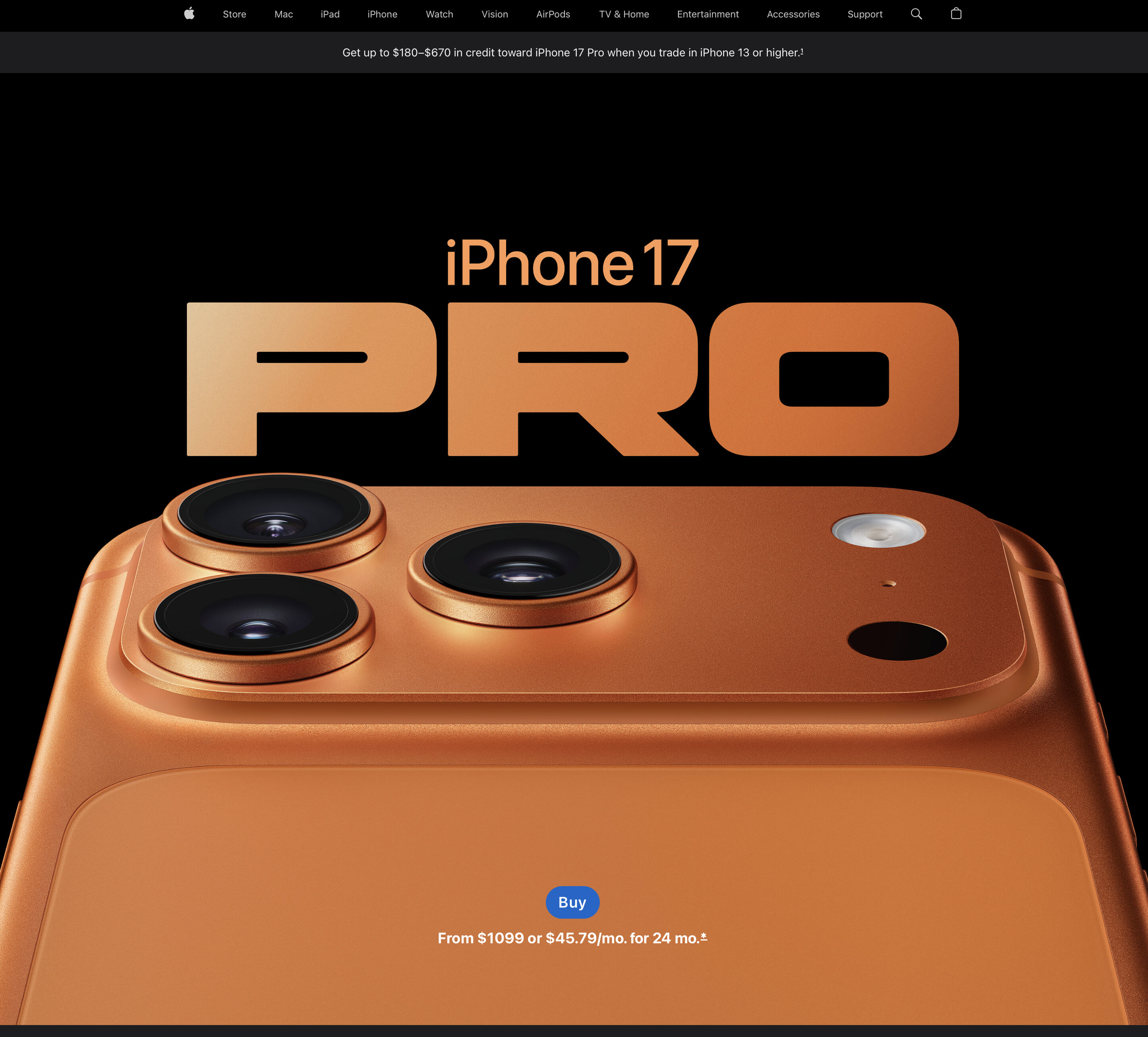
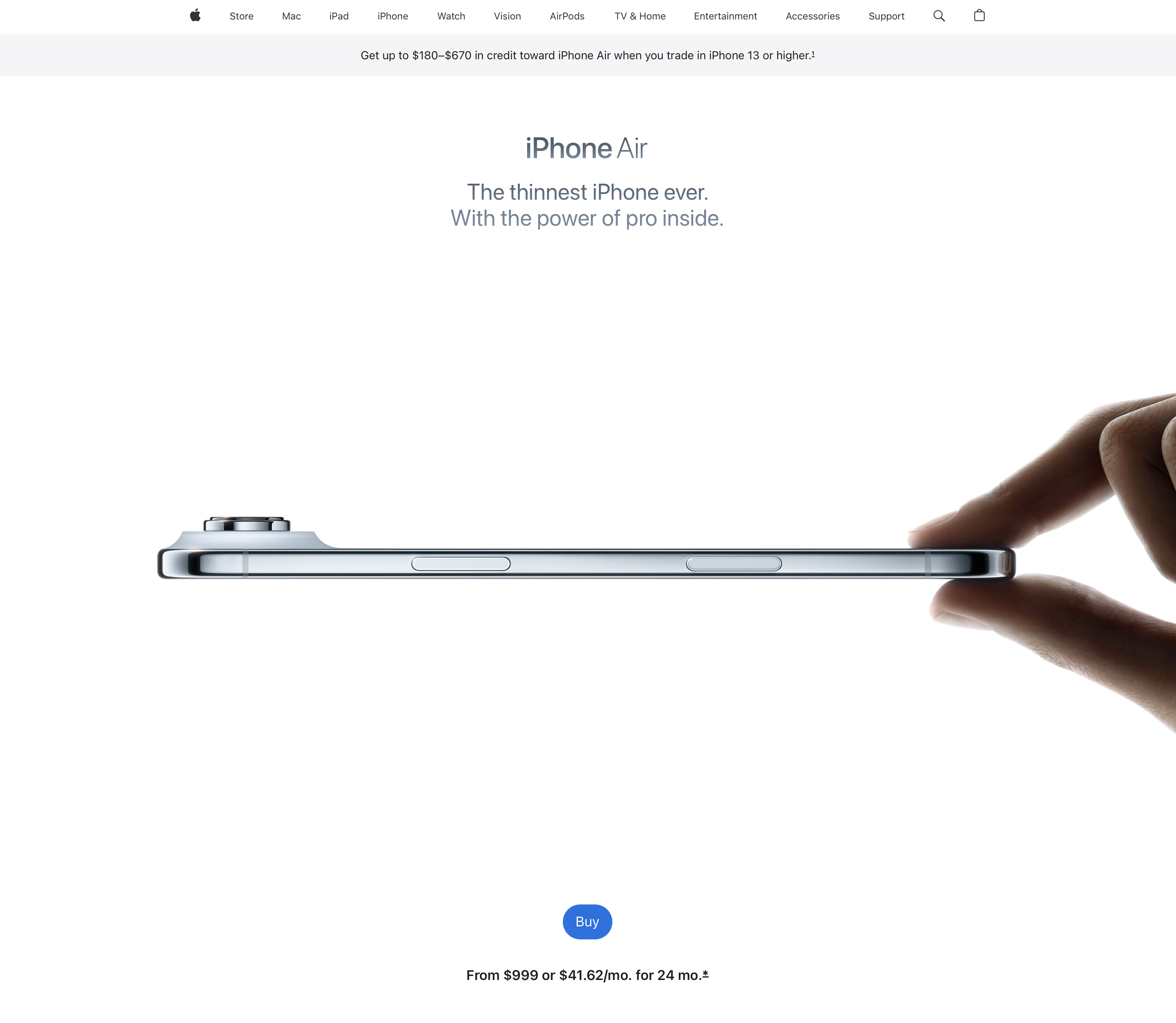
I’ll add that I suspect San Francisco might effectively be Apple’s “forever font”. Forever is a long time, but San Francisco, in its default appearance, strives for the sort of timelessness that Helvetica achieved. And San Francisco offers a wide (no pun intended) variety of widths and weights. This is San Francisco. This is too. (Screenshots for posterity, when Apple’s website changes: iPhone 17 Pro and iPhone Air.)
I also suspect that Apple Silicon is Apple’s “forever architecture”.
- Apple’s 26.2 OS Updates ★
-
Apple released all of its OS 26.2 updates a week ago today. A little unusual for Apple to release OS updates on a Friday, but I think they wanted to get these out before Christmas week. And I don’t think it was rushed — for iOS 26.2 at least, there were two release candidate builds during beta testing. I suspect Apple had hoped to release them earlier.
I know it seemed weird back at WWDC when Apple announced that they were re-numbering all their OS versions to start with 26. But now that the change has settled in for a few months, it seems very natural. It’s so easy now to remember that the current major version for each OS is 26. It’s also easier to talk about new features that span across OSes. And, in the future, when you see a reference to, say, iOS 26, you’ll know exactly when that version came out without having to think, because it’s right there in the version number itself.
A few other notes:
- Juli Clover at MacRumors, as usual, has a great rundown of what’s new across the whole system in iOS 26.2, copiously illustrated with screenshots. Clover notes: “For pop-out menus that expand from a corner button, iOS 26.2 adds a quicker, bouncier animation that looks like the animation that Apple showed off at WWDC.” Popover menus are just one example, but this is actually true for a lot of Liquid Glass details. iOS 26.2 is the first release that visually delivers on most of what Apple showed in the WWDC keynote.
- Zac Hall has another good iOS 26.2 rundown, also illustrated, at 9to5Mac.
- Clover also notes that iOS 26.2, for some users (including me), defaults to a first-run screen that encourages you to turn on automatic OS updates. Pay attention if you don’t want that.
- A list of iPadOS 26.2 changes from Ryan Christoffel at 9to5Mac.
- Nadeem Sarwar at Digital Trends has a good piece showing the new AirDrop code feature, to allow AirDropping with people who aren’t in your contacts for up to 30 days.
- MacOS 26.2 Tahoe changes, from MacRumors and from 9to5Mac.
- Clover on tvOS 26.2, WatchOS 26.2, and VisionOS 26.2.
- Michael Tsai’s roundup of links regarding MacOS 26.2 Tahoe, and for iOS 26.2.
Lastly, iOS 26.2 seems to be the release that Apple is starting to suggest as an upgrade for users who hadn’t already installed it by choice. Be prepared for questions and complaints from non-nerd friends and family who’ve never even heard of “Liquid Glass”.
- Apple Is Adding More Ad Spots to App Store Results ★
-
Apple, on its Apple Ads site:
Search is the way most people find and download apps on the App Store, with nearly 65 percent of downloads happening directly after a search. To help give advertisers more opportunities to drive downloads from search results, Apple Ads will introduce additional ads across search queries. You don’t need to change your campaign in order to be eligible for any new positions. Your ad will run in either the existing position — at the top of search results — or further down in search results. If you have a search results campaign running, your ad will be automatically eligible for all available positions, but you can’t select or bid for a particular one.
The ad format will be the same in any position, using a default product page or custom product page, and an optional deep link. You’ll be billed as usual based on your pricing model: cost per tap or cost per install.
I have a bad feeling about this.
Thursday, 18 December 2025
- ByteDance Signs Deal to Divest U.S. TikTok App ★
-
David Shepardson, reporting for Reuters:
TikTok’s Chinese owner, ByteDance, said Thursday it signed binding agreements with three major investors to form a joint venture to operate TikTok’s U.S. app led by American and global investors in a bid to avoid a U.S. government ban, a significant step toward ending years of uncertainty.
The craziest aspect of this whole saga is that TikTok has been operating illegally since Trump took office. Not some sort of nitpicking technicality. The whole point of the PAFACA act was to ban TikTok in the US until and unless they were sold to American owners. No cloud service. No app store downloads. Trump directed the Justice Department simply not to enforce the law … and the biggest companies in the world just said OK, sure.
This just isn’t normal. There are always edge cases in the enforcement of any law. Political leanings affect priorities. Old laws are often ignored. But PAFACA was a brand new law, with bipartisan support, specifically written to target TikTok, and the Trump administration decided to just ignore it. This wouldn’t happen anywhere in Europe or in, say, Japan. And it wouldn’t have happened under any previous US administration, Democrat or Republican. It’s not the biggest issue or worst wrongdoing of the Trump 2.0 administration, but it’s clearest indication of their disregard for the rule of law.
See also: Techmeme’s roundup of news and commentary on the deal. (Karl Bode at Techdirt: “It’s Somehow The Shittiest Possible Outcome, Making Everything Worse”.)
- Michael Bierut Told Us What He Really Thinks of ITC Garamond ★
-
Michael Bierut, “I Hate ITC Garamond”, for Design Observer back in 2004:
ITC Garamond was designed in 1975 by Tony Stan for the International Typeface Corporation. Okay, let’s stop right there. I’ll admit it: the single phrase “designed in 1975 by Tony Stan” conjures up a entire world for me, a world of leisure suits, harvest gold refrigerators, and “Fly, Robin, Fly” by Silver Convention on the eight-track. A world where font designers were called “Tony” instead of “Tobias” or “Zuzana.” Is that the trouble with ITC Garamond? That it’s dated?
Maybe. Typefaces seem to live in the world differently than other designed objects. Take architecture, for example. As Paul Goldberger writes in his new book on the rebuilding of lower Manhattan, Up From Zero, “There are many phases to the relationships we have with buildings, and almost invariably they come around to acceptance.” Typefaces, on the other hand, seem to work the other way: they are enthusiastically embraced on arrival, and then they wear out their welcome. Yet there are fonts from the disco era that have been successively revived by new generations. Think of Pump, Aachen, or even Tony Stan’s own American Typewriter. But not ITC Garamond.
The most distinctive element of the typeface is its enormous lower-case x-height. In theory this improves its legibility, but only in the same way that dog poop’s creamy consistency in theory should make it more edible.
I can’t explain how it is that I’ve never linked to this piece before.
- Condensed Serif Typefaces, à la Apple Garamond, Are Back in Vogue ★
-
Katie Deighton, reporting last month for The Wall Street Journal:
Henry Modisett wanted his employer to stand out. Competitors of the artificial-intelligence firm Perplexity were embracing their science-fiction roots with futuristic branding that felt cold to him. So Modisett, the firm’s vice president of design, looked to the past.
He plowed through graphic-design books and tomes of logos featuring obscure examples like Hungarian oil companies from the ’80s. But he kept coming back to a slender, bookish typeface famously used in Apple’s “Think Different” campaign. Modisett in 2023 began slipping a cousin of the font into Perplexity’s software and marketing materials.
“It felt fresh,” he said.
Not anymore.
Apple’s custom variant of ITC Garamond was called, appropriately enough, Apple Garamond. Apple adopted it in 1984 with the introduction of the Macintosh, and continued using it through the early years of the Aqua/iMac aesthetic. For me it evokes the pinnacle of the six-color era. For Apple’s brand identity and marketing materials, after Apple Garamond came Myriad — which Apple commissioned custom variants of from Adobe. And then Myriad was succeeded by San Francisco, which I suspect still has many years ahead of it. For the last 40 years Apple has only gone through three identity fonts: Garamond → Myriad → San Francisco.
That this style of font is back in vogue is fun. It’s a good look. Friendly. Serious but not staid. The typeface a lot of these brands are using for this today is Instrument Serif, which I don’t love. It’s not bad. But it’s not great. Apple Garamond was great.
(ITC Garamond — but not condensed — served, distinctively, as both the display and body text typeface for O’Reilly books in their heyday. That typeface doesn’t look or feel Apple-like at all, nor does Apple Garamond look or feel O’Reilly-like at all.)
- GCDB’s Guide to Gift Card Tampering Scams ★
-
Gift Card Database (GCDB) has a guide to spotting tampered gift cards:
Whilst it may seem unusual, you should tear open this version of Apple gift card before you purchase it so that you can inspect the redemption code. Look for missing or scratched off characters (it may be as subtle as changing an L to look like an I).
If you’re satisfied that the redemption code is legible and undamaged, you can purchase the gift card by scanning the barcode on the other side. If staff question your decision to open it first, calmly explain why you were checking it and refer them to the image above if it helps.
The one major downside of this precaution is that it requires you to basically destroy the gift card packaging so if it’s intended as a present you may just have to give them the smaller inner card instead. Still, it’s better to be safe than sorry.
I’m not bashful, but I’d be very uncomfortable opening gift cards before I purchased them. The whole point of this is that gift card scams are on the rise. If I saw someone opening gift cards in-store before purchasing them, I’d think they were shameless scammers. If you need to destroy the retail packaging for a gift card to feel certain it hasn’t been tampered with, the whole system seems fundamentally broken. (And just eyeballing the redemption code doesn’t prove it hasn’t been tampered with.)
Wednesday, 17 December 2025
- Are Apple Gift Cards Safe to Redeem? ★
-
You will recall the Apple Account fiasco of Paris Buttfield-Addison, whose entire iCloud account and library of iTunes and App Store media purchases were lost when his Apple Account was locked, seemingly after he attempted to redeem a tampered $500 Apple Gift Card that he purchased from a major retailer. I wrote about it, as did Michael Tsai, Nick Heer, Malcom Owen at AppleInsider, and Brandon Vigliarolo at The Register. Buttfield-Addison has updated his post a few times, including a note that Executive Relations — Apple’s top-tier support SWAT team — was looking into the matter. To no avail, at least yet, alas.
Adam Engst, writing at TidBITS today:
There is one way the Apple community could exert some leverage over Apple. Since innocently redeeming a compromised Apple Gift Card can have serious negative consequences, we should all avoid buying Apple Gift Cards and spread the word as widely as possible that they could essentially be malware. Sure, most Apple Gift Cards are probably safe, but do you really want to be the person who gives a close friend or beloved grandchild a compromised card that locks their Apple Account? And if someone gives you one, would you risk redeeming it? It’s digital Russian roulette.
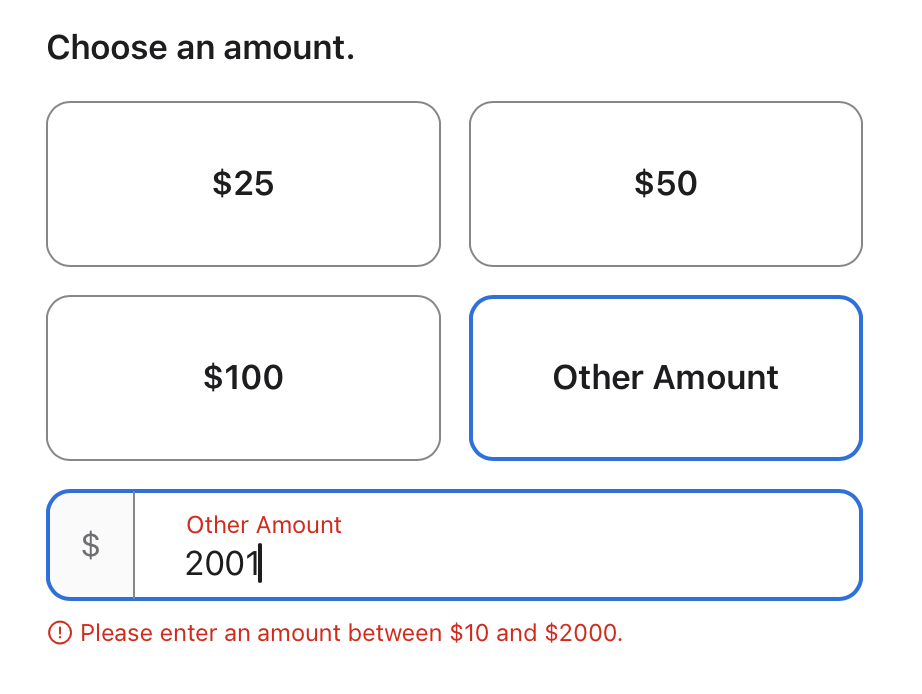
I suspect that one part of Buttfield-Addison’s fiasco is the fact that his seemingly problematic gift card was for $500, not a typical amount like $25, but that’s just a suspicion on my part. We don’t know — because key to the Kafka-esque nature of the whole nightmare is that his account cancellation was a black box. Not only has Apple not yet restored his deactivated Apple Account, at no point in the process have they explained why it was deactivated in the first place. We’re left to guess that it was related to the tampered gift card and that the relatively high value of the card in question was related. $500 is a higher value than average for an Apple gift card, but that amount is less than the average price for a single iPhone. Apple itself sets a limit of $2,000 on gift cards in the US, so $500 shouldn’t be considered an inherently suspicious amount.
The whole thing does make me nervous about redeeming, or giving, Apple gift cards. Scams in general seem to be getting more sophisticated. Buttfield-Addison says he bought the card directly from “a major brick-and-mortar retailer (Australians, think Woolworths scale; Americans, think Walmart scale)”. Until we get some clarity on this I feel like I’d only redeem Apple gift cards at an Apple retail store, for purchases not tied to my Apple Accounts. (I’ve still got two — one for iCloud, one for media purchases.)
In addition to the uncertainty this leaves us with regarding the redemption of Apple gift cards, I have to wonder what the hell happens to these Apple Accounts that are deactivated for suspected fraud. You would think that once escalated high enough in Apple’s customer support system, someone at Apple could just flip a switch and re-activate the account. The fact that Buttfield-Addison’s account has not yet been restored, despite the publicity and apparent escalation to Executive Relations, makes me think it can’t be restored. I don’t know how that can be, but it sure seems like that’s the case. Darth Vader’s “And no disintegrations” admonition ought to be in effect for something like this. I have the sinking feeling that the best Apple is able to do is something seemingly ridiculous, like refund Buttfield-Addison for every purchase he ever made on the account and tell him to start over with a new one.
My other question: Were any humans involved in the decision to deactivate (disintegrate?) his account, or was it determined purely by some sort of fraud detection algorithm?
Update: Very shortly after I posted the above, Buttfield-Addison posted an update that his account was successfully restored by the ninja on Apple’s Executive Relations team assigned to his case. That’s great. But that still leaves the question of how safe Apple gift cards are to redeem on one’s Apple Account. It also leaves the question of how this happened in the first place, and why it took the better part of a week to resolve.
- The Story Behind Windows 3.1’s ‘Hot Dog Stand’ UI Color Scheme (Which Isn’t Much of a Story at All) ★
-
Wes Fenlon, writing for PC Gamer:
Did Windows 3.1 really ship with a garish color scheme that was dared into being? That was a story I needed to hear, so I went digging for the credits of the Microsoft employees who worked on the user interface back then and found my way to Virginia Howlett, who joined Microsoft in 1985 as the company’s first interface designer, and worked there up through the launch of Windows 95.
Howlett:
I have been mystified about why that particular theme causes so much comment in the media. Maybe it’s partly the catchy name. (Never underestimate the power of a good brand name!)
I do remember some discussion about whether we should include it, and some snarky laughter. But it was not intended as a joke. It was not inspired by any hot dog stands, and it was not included as an example of a bad interface — although it was one. It was just a garish choice, in case somebody out there liked ugly bright red and yellow.
The ‘Fluorescent’ theme was also pretty ugly, but it didn’t have a catchy name, so I’ve never heard anything about it.
I remember this color theme, because I had to use Windows 3.1 at a few jobs in the 1990s, and anyone who used it remembers “Hot Dog Stand”. Howlett’s explanation is exactly what I always thought. It wasn’t for accessibility. It wasn’t a dare or a joke. It was something they knew was ugly and they shipped it anyway in case people wanted an ugly UI.
That’s Microsoft.
Tuesday, 16 December 2025
- James Cameron’s Instructions to Theater Projectionists Regarding ‘Avatar 3: Fire and Ash’ ★
-
The letter is typeset in Papyrus, the typeface for which James Cameron’s affection inspired not one but two classic SNL shorts starring Ryan Gosling — which Cameron has a good sense of humor about.
Terrence Malick’s letter accompanying Tree of Life in 2011 was plainly and humbly set in Helvetica. David Lynch’s accompanying Mulholland Drive was also in Helvetica, but in a very Lynchian way. And then there is Stanley Kubrick, whose letter to projectionists that accompanied Barry Lyndon was typeset in Futura — quite the feat in 1975. (It was almost certainly IBM’s Mid-Century typeface, a beautiful adaptation of Futura for their Executive line of typewriters.) Cool custom letterhead on Kubrick’s as well.
- Typefaces for Dyslexia ★
-
I dare say this post from Adrian Roselli — first published in 2015 and updated 16 times (and counting) since — is the definitive debunking of the pseudoscience claims regarding deliberately ugly fonts being somehow beneficial to readers with dyslexia.
- Zara Picken’s ‘Modern Illustration’ ★
-
Modern Illustration is a project by illustrator Zara Picken, featuring print artefacts from her extensive personal collection. Her aim is to preserve and document outstanding examples of mid-20th century commercial art, creating an accessible resource for understanding illustration history.
Glorious collection of mid-century illustrations and graphic design. Also a good follow on Instagram. (Via Dan Cederholm.)
Monday, 15 December 2025
- ‘A Brief History of Times New Roman’ ★
-
One more from Matthew Butterick, from his Typography for Lawyers, and a good pairing with Mark Simonson’s “The Scourge of Arial”:
Yet it’s an open question whether its longevity is attributable to its quality or merely its ubiquity. Helvetica still inspires enough affection to have been the subject of a 2007 documentary feature. Times New Roman, meanwhile, has not attracted similar acts of homage.
Why not? Fame has a dark side. When Times New Roman appears in a book, document, or advertisement, it connotes apathy. It says, “I submitted to the font of least resistance.” Times New Roman is not a font choice so much as the absence of a font choice, like the blackness of deep space is not a color. To look at Times New Roman is to gaze into the void.
As Simonson mentions in “The Scourge of Arial”, regarding Helvetica’s enduring popularity:
As it spread into the mainstream in the ’70s, many designers tired of it and moved on to other typographic fashions, but by then it had become a staple of everyday design and printing. So in the early ’80s when Adobe developed the PostScript page description language, it was no surprise that they chose Helvetica as one of the basic four fonts to be included with every PostScript interpreter they licensed (along with Times, Courier, and Symbol). Adobe licensed its fonts from the original foundries, demonstrating their respect and appreciation for the integrity of type, type foundries and designers. They perhaps realized that if they had used knock-offs of popular typefaces, the professional graphic arts industry — a key market — would not accept them.
To my mind, Helvetica, Times, and Courier are the three canonical “default” fonts. One modern sans, one modern serif, and one for “typewriter”/code. (When I see Courier in print, at display sizes, my mind immediately wonders if the printer was missing the font that the designer specified in the document file.)
The Symbol font is a different story. It existed and was included with PostScript as one of just four defaults because the 8-bit character encodings of the time only had space for 255 characters. You needed a special font like Symbol to access “exotic” characters like Greek letters, math symbols (e.g. × or ÷), or arrows (↑ ↓ ← →). So there were really only three regular “fonts”, for prose, included with PostScript: Helvetica, Courier, and Times.
Courier and Times were eventually superseded in popular use by rivals that Microsoft licensed for inclusion in Windows: Courier New and Times New Roman, respectively. Times was from Linotype, Times New Roman from Monotype. Both versions of Times are legitimate digital interpretations of the 1929 hot metal design of Times Roman, and their differences are minor. Courier New, on the other hand, is so ugly — anemically thin and weak — that it hurts my teeth whenever I encounter it.
- ‘The Scourge of Arial’ ★
-
Typographer Mark Simonson, all the way back in 2001:
Arial is everywhere. If you don’t know what it is, you don’t use a modern personal computer. Arial is a font that is familiar to anyone who uses Microsoft products, whether on a PC or a Mac. It has spread like a virus through the typographic landscape and illustrates the pervasiveness of Microsoft’s influence in the world.
Arial’s ubiquity is not due to its beauty. It’s actually rather homely. Not that homeliness is necessarily a bad thing for a typeface. With typefaces, character and history are just as important. Arial, however, has a rather dubious history and not much character. In fact, Arial is little more than a shameless impostor.
This is the exegesis on Arial. There’s also an exemplary illustrated sidebar, “How to Spot Arial”, which shows in detail how to tell the fucking bastard from Helvetica. If you want to be like me, cursed to notice Arial each time it appears in life, study that, and take note how every single way that it’s different from Helvetica is in the direction of making it uglier.
I’ve referenced “The Scourge of Arial” a few times over the years here at DF, but the recent contretemps over Times New Roman’s return at the US State Department has the general topic of “default fonts” at top of mind. For me, at least.
One of the old posts in which I linked to “The Scourge of Arial” was this gem from September 2007: “Hacking the iPhone Notes App for the Admittedly Nit-Picky Purpose of Changing the Text Font to Helvetica”. This was so early in the iPhone era — just three months after the original iPhone shipped — that we were calling its operating system “mobile OS X”, and none of it was protected in any way, so you could do what I did and delete the Marker Felt font (Merlin Mann: “Comic Sans with a shave and a breath mint”) and then use a hex editor to modify the Mobile Notes app so it would fall back to Helvetica instead of cursed Arial after Marker Felt was deleted. Good times.
- A Note on Current SMS Marketing Practices ★
-
Back on November 28, I bought a new cap from New Era’s web store. They offered a discount of some sort if I gave them a phone number and permitted them to send me marketing messages. That got me curious about what they’d do with my number, and it was a 50-some-dollar cap, so I took the discount and gave them my Google Voice number. That was 17 days ago. They sent me 19 SMS marketing messages since then, before I’d seen enough today and called it quits on this experiment. (Or called “STOP”, perhaps, which was the magic word to opt out.) They didn’t send a text every day, and on some days, they sent more than one. But the overall effect was relentlessly annoying.
I’m sure some of the people who sign up for these texts in exchange for a discount code wind up clicking at least one of the offers sent via SMS and buying more stuff, and the marketing team running this points to those sales as proof that it “works”. You can measure that. It shows up as a number. Some people in business only like arguments that can be backed by numbers. 3 is more than 2. That is indeed a fact.
But there are an infinite number of things in life that cannot be assigned numeric values. Many of these things matter too. Like the fact that in my mind, after experiencing this, the New Era company smells like a sweaty hustler in a cheap polyester suit. If their brand were a man, I’d check my pants pocket for my wallet after interacting with him.
- Disney, Immediately After Partnering With OpenAI for Sora, Sends Google a Cease-and-Desist Letter Accusing Them of Copyright Infringement on ‘Massive Scale’ ★
-
Todd Spangler, reporting last week for Variety:
As Disney has gone into business with OpenAI, the Mouse House is accusing Google of copyright infringement on a “massive scale” using AI models and services to “commercially exploit and distribute” infringing images and videos. On Wednesday evening, attorneys for Disney sent a cease-and-desist letter to Google, demanding that Google stop the alleged infringement in its AI systems. [...]
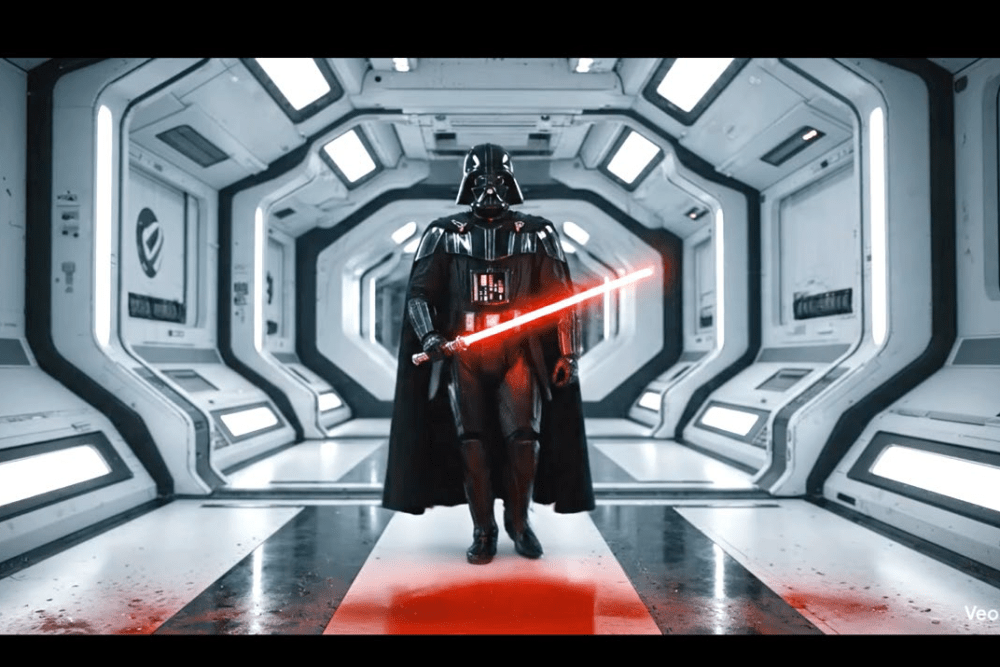
According to the letter, which Variety has reviewed, Disney alleges that Google’s AI systems and services infringe Disney characters including those from “Frozen,” “The Lion King,” “Moana,” “The Little Mermaid,” “Deadpool,” “Guardians of the Galaxy,” “Toy Story,” “Brave,” “Ratatouille,” “Monsters Inc.,” “Lilo & Stich,” “Inside Out” and franchises such as Star Wars, the Simpsons, and Marvel’s Avengers and Spider-Man. In its letter, Disney included examples of images it claims were generated by text prompts in Google’s AI apps, including of Darth Vader (pictured above).
It’s very Disney-esque to embrace a new medium. Alone among the major movie studios in the 1950s, Disney embraced television. TV was a threat to the cinema, but it was also an enormous opportunity. The other studios only saw the threat. Walt Disney focused on the opportunity. But Disney did this not by giving their content to television on the cheap or for free. They did it by getting paid. That’s what they’re doing with generative AI.
Here’s the Gemini-generated Darth Vader image. Note the blood splatter — which was un-Star Wars-like even before Disney’s purchase of Lucasfilm. Also, even worse, his lightsaber is totally wrong.
- Roomba Maker iRobot Declares Bankruptcy, Falls Into Chinese Hands ★
-
John Keilman, reporting for The Wall Street Journal (gift link):
The company that makes Roomba robotic vacuums declared bankruptcy Sunday but said its devices will continue to function normally while the company restructures.
Massachusetts-based iRobot has struggled financially for years, beset by foreign competition that made cheaper and, in the opinion of some buyers, technologically superior autonomous vacuums. When a proposed sale to Amazon.com fell through in 2024 because of regulatory concerns, the company’s share price plummeted.
Founded in 1990, iRobot’s autonomous vacuum cleaners helped pioneer robotics for consumers. Many recent versions of the Roomba have features that are controlled through the brand’s app. Some owners have worried that, similar to other products tied to the internet, their Roombas could “brick” — or stop working — if the company went under. iRobot said it anticipates no disruptions to its product support or app functionality.
Matt Stoller, author of the (generally excellent) website Big, on Twitter/X today:
iRobot is selling itself to Chinese manufacturers, a result of hedge fund attack a decade ago that gutted the company. Wall Street is a threat to our national sovereignty.
Matt Stoller, author of the (generally knee-jerk anti-acquisition) website Big, on Twitter back in 2022, when Amazon announced its intended acquisition:
Amazon just bought iRobot, which has immense amounts of data about people’s physical homes. It never ends. Congress should have passed @TomCottonAR’s bill to bar big tech mergers.
[Press release: “Amazon and iRobot sign an agreement for Amazon to acquire iRobot”]
You can’t have it both ways. If Amazon’s proposed acquisition would have gone through, iRobot, an American company, would now be a (small) subsidiary of Amazon, another American company. The acquisition did not go through, which is what Stoller wanted, and now here we are with iRobot — which in Stoller’s own description “has immense amounts of data about people’s physical homes” — in the hands of a Chinese company.
iRobot’s demise wasn’t caused by hedge fund investments a decade ago. The hedge fund vultures swooped in after the Amazon acquisition collapsed in early 2024. Here’s Connie Loizos, writing yesterday for TechCrunch:
It seemed like a fairy tale ending — the scrappy MIT spinoff absorbed into the Everything Store’s sprawling empire.
Except European regulators had other ideas. Indeed, amid threats they would block the deal — they believed Amazon could foreclose rivals by restricting or degrading access to its marketplace — Amazon and iRobot agreed to kill the deal in January 2024, with Amazon paying a $94 million breakup fee and walking away. Angle resigned. The company’s shares nosedived. It shed 31% of its workforce.
What followed afterward was a slow-motion collapse. Earnings had been declining since 2021 thanks to supply chain chaos and Chinese competitors flooding the market with cheaper robot vacuums.
iRobot didn’t get big enough on its own quickly enough. It was under fierce competitive pressure from Chinese robot vacuums. Roombas seemed groundbreaking and innovative at first, but technical progress stalled. Amazon’s hands aren’t exactly clean in terms of putting the squeeze on iRobot: the primary place where the cheaper Chinese robot vacuums were being sold was, of course, Amazon.
By 2022, the Amazon acquisition was iRobot’s lifeline. EU regulators wanted it shot down, and despite the fact that it was one American company trying to acquire another, the anti-big-tech Biden administration clearly preferred to let the deal collapse. The US should have told the EU to mind their own companies.
Now iRobot is in Chinese hands, the worst possible outcome. The Amazon acquisition wasn’t anti-competitive — it was iRobot’s last chance to remain competitive.
- Jaho Coffee Roaster ★
-
My thanks to Jaho Coffee Roaster for sponsoring last week at DF. Great coffee changes the day. Since 2005, Jaho’s family-owned roastery has taken the slow and careful approach, sourcing small-lot coffees, roasting in small batches and shipping every bag fresh. Award-winning coffee delivered to your home or office, shipped fresh nationwide.
Jaho was kind enough to send me a few bags of their beans, and I can vouch that they roast excellent coffee — the kind of tasty beans where, when I finish my last morning cup, I’m tempted to brew a little more even though I know I’m fully caffeinated.
Holiday gifts? Fresh coffee is a gift that never misses, easy to give, even better to receive. Give better coffee this season. Even better: DF readers get 20 percent off with code DF.
Sunday, 14 December 2025
- Rob Reiner and Wife Found Stabbed to Death at Home ★
-
Deadline:
The bodies of Rob Reiner and his wife Michele Reiner have been found in their Brentwood home, sources confirmed to Deadline.
It appears the acclaimed director and his wife were slain by knife wounds.
The LAPD are on the scene, but have not issued an official confirmation yet. A press conference is expected to take place tonight.
Rob Reiner and his wife, Michele Singer Reiner, were killed by their son, Nick, multiple sources confirm to People.
So it goes.
Saturday, 13 December 2025
- ‘Pluribus’ Becomes Apple TV’s Most Watched Show Ever ★
-
Marcus Mendes, 9to5Mac:
Now, on the same day that F1 The Movie debuted at the top of Apple TV’s movie rankings, the company confirmed that Pluribus has reached another, even more impressive milestone: it is the most watched show in the service’s history. Busy day. [...]
Apple doesn’t share viewership numbers, so it is hard to quantify what exactly this means.
However, considering that Apple TV has had quite a few hit shows, including Ted Lasso, Severance, The Morning Show, Slow Horses, and, more recently, The Studio, it is still notable that Pluribus has managed to top them all in just a few short weeks.
I love Pluribus. I’d rank it behind Severance and Slow Horses, but it’s a close call between Pluribus and The Studio for third place on my Apple TV favorites list. Great shows all four of them. I don’t think there’s any question that when it comes to prestige series, Apple TV had the best 2025. Which other streamer had four shows of that caliber this year?
Jason Kottke is iffy on it, though, because he’s not seeing the appeal of Rhea Seehorn’s protagonist Carol Sturka. Count me with Max Roberts — I find Carol very compelling, and uncomfortably realistic. She feels to me like a real person, not a “character”. It’s one of the best cinematic explorations of loneliness since Tom Hanks in Cast Away, or WALL-E. Update: A few more that come to mind: The Martian and Moon.
- Lucas de Groot, Designer of Calibri, on the State Department’s Switch Back to Times New Roman ★
-
From the LucasFonts account, in a comment on Hacker News:
Professional typography can be achieved with both serif and sans-serif fonts. However, Times New Roman — a typeface older than the current president — presents unique challenges. Originally crafted in Great Britain for newspaper printing, Times was optimised for paper, with each letterform meticulously cut and tested for specific sizes. In the digital era, larger size drawings were repurposed as models, resulting in a typeface that appears too thin and sharp when printed at high quality.
Serif fonts are often perceived as more traditional, but they are also more demanding to use effectively. While a skilled typographer can, in theory, produce excellent results with Times, using it in its default digital form is not considered professional practice.
This echoes my thoughts: the State Department should use a traditional-looking serif typeface, but they should choose — or even better, commission — something far better than Times New Roman.
Also from that Hacker News thread, comes this delightful Easter egg: do a Google search for “Lucas de Groot”, and the results will be set in Calibri. Same thing for common fonts like, yes, Times New Roman.
- Pondering Middle East Petrostates as American Media Owners ★
-
Peter Kafka, writing at Business Insider:
And last: It’s possible that Middle Eastern countries are investing in an American media conglomerate solely for a financial return, and would have zero interest in the content that conglomerate makes and distributes. But that’s an assertion that many folks would have a hard time taking at face value. And while lots of American companies have sought Middle Eastern funding for years, there was a pause after 2018, following the murder and dismemberment of Washington Post contributor Jamal Khashoggi — a shocking act the CIA concluded was ordered by Saudi Arabia’s Crown Prince Mohammed bin Salman himself. (He has denied involvement.)
Now bin Salman might end up owning a piece of major American news outlets and other media arms. How’s that going to go over?
David Ellison’s hostile takeover proposal reportedly would have these Middle East partners owning “non-voting” shares, but regardless of their rights in the corporate by-laws, their mere ownership would give them influence. These are profoundly fucked-up countries, where women are a repressed underclass, LGBT activity is punishable by death, and their word is worth nothing when they promise to abide by Western norms.
- The Infinite Loop of One LLM Talking to Another ★
-
This is very funny, but also a good indication of just how far away these things are from actual intelligence. First, a reasonable human being would never get caught in a loop like this. Second, only humans can not only recognize what’s going on here, but also see the humor in it.
- Paris Buttfield-Addison’s Apple Account Is in Kafka Mode ★
-
Paris Buttfield-Addison:
A major brick-and-mortar store sold an Apple Gift Card that Apple seemingly took offence to, and locked out my entire Apple ID, effectively bricking my devices and my iCloud Account, Apple Developer ID, and everything associated with it, and I have no recourse. [...]
I am not a casual user. I have literally written the book on Apple development (taking over the Learning Cocoa with Objective-C series, which Apple themselves used to write, for O’Reilly Media, and then 20+ books following that). I help run the longest-running Apple developer event not run by Apple themselves, /dev/world. I have effectively been an evangelist for this company’s technology for my entire professional life. We had an app on the App Store on Day 1 in every sense of the world.
I am asking for a human at Apple to review this case. I suspect an automated fraud flag regarding the bad gift card triggered a nuclear response that frontline support cannot override. I have escalated this through my many friends in WWDR and SRE at Apple, with no success.
I am desperate to resolve this and restore my digital life.
The triggering event, as best he can determine, was his failed attempt to redeem a $500 Apple gift card purchased from a major retail chain. There’s a very active thread on Hacker News about his plight, where Buttfield-Addison himself is commenting. That thread pointed to this description of one form of gift card thievery, in which thieves tamper with the cards in-store to steal the codes, tamper with the code, and then some unsuspecting victim buys the tampered card and the thieves get the credit.
Friday, 12 December 2025
- Daring Fireball Weekly Sponsorships, End of Year and Q1 2026 ★
-
Weekly sponsorships have been the top source of revenue for Daring Fireball ever since I started selling them back in 2007. They’ve succeeded, I think, because they make everyone happy. They generate good money. There’s only one sponsor per week and the sponsors are always relevant to at least some sizable portion of the DF audience, so you, the reader, are never annoyed and hopefully often intrigued by them. And, from the sponsors’ perspective, they work. My favorite thing about them is how many sponsors return for subsequent weeks after seeing the results.
After a solid run in the second half of 2025 with sponsorships sold out weeks, if not months, in advance, we’ve arrived at the end of the year with the last three weeks still open — starting this coming Monday. I’m offering those weeks at a discount.
- December 15–21 (next week)
- December 22–28
- December 29–January 4
Traffic at DF tends not to ebb over holidays, and while I slow down, I don’t stop posting. If you still check DF when you’re bored over the holidays, think about how many other people do too.
I’m also booking sponsorships for Q1 2026, and six of those weeks are already sold.
If you’ve got a product or service you think would be of interest to DF’s audience of people obsessed with high quality and good design, get in touch.
- Apple at the AWS re:Invent 2025 Keynote ★
-
Six-minute segment from Amazon’s AWS re:Invent keynote last week:
Payam Mirrashidi, VP, Cloud Systems & Platforms, Apple, explains how AWS Graviton helps improve developer velocity at scale. Hear Swift’s journey from the premier programming language for the Apple ecosystem to adoption by millions of developers around the world building apps for everything from devices to data centers.
(Graviton is AWS’s ARM-in-the-cloud initiative.)
Nothing earth-shaking in this brief presentation, but it’s not often you see an Apple VP on stage at another company’s keynote, or see Apple so very publicly declare their reliance on someone else’s infrastructure. It speaks to Apple and Amazon being more allies than competitors amongst the big tech companies. And of course, you even less often see anyone from Apple speak live on stage at Apple’s own keynotes, which, alas, are no longer live nor on stages.
- Special Dyslexia Fonts Are Based on Voodoo Pseudoscience ★
-
Youki Terada, writing for Edutopia in 2022 (via Jens Kutílek):
Under close scrutiny, the evidence for dyslexia-friendly fonts falls apart. In a 2017 study, for example, researchers tested whether OpenDyslexic, a popular font with thicker lines near the bottom of the letters, could improve the reading rate and accuracy for young children with dyslexia. According to the developers of the font, which is open-source and free of charge, the “heaviness” of the letters prevented them from turning upside down for readers with dyslexia, which they claimed would improve reading accuracy and speed.
Researchers put the font to the test, comparing it with two other popular fonts designed for legibility — Arial and Times New Roman — and discovered that the purportedly dyslexia-friendly font actually reduced reading speed and accuracy. In addition, none of the students preferred to read material in OpenDyslexic, a surprising rebuke for a font specifically designed for the task.
In a separate 2018 study, researchers compared another popular dyslexia font — Dyslexie, which charges a fee for usage — with Arial and Times New Roman and found no benefit to reading accuracy and speed. As with the previous dyslexia font, children expressed a preference for the mainstream fonts. “All in all, the font Dyslexie, developed to facilitate the reading of dyslexic people, does not have the desired effect,” the researchers concluded. “Children with dyslexia do not read better when text is printed in the font Dyslexie than when text is printed in Arial or Times New Roman.”
Quoting from the abstract of the first study cited above:
Results from this alternating treatment experiment show no improvement in reading rate or accuracy for individual students with dyslexia, as well as the group as a whole. While some students commented that [OpenDyslexic] was “new” or “different”, none of the participants reported preferring to read material presented in that font. These results indicate there may be no benefit for translating print materials to this font.
The problem isn’t dyslexia if you don’t notice that OpenDyslexic is “different”.
Quoting from the second cited study:
Words written in Dyslexie font were not read faster or more accurately. Moreover, participants showed a preference for the fonts Arial and Times New Roman rather than Dyslexie, and again, preference was not related to reading performance. These experiments clearly justify the conclusion that the Dyslexie font neither benefits nor impedes the reading process of children with and without dyslexia.
OpenDyslexic’s website has a “related research” page but of the four articles they link to, three are 404s, and the other one only studied “extra-large letter spacing”. I chased down the correct link to one of the other articles they cite, and the only fonts it studied were Verdana, Arial, Georgia, and Times.
Some people claim to prefer reading text set with OpenDyslexic. Some people like Comic Sans, too. But I was unaware that these typefaces that purport to be designed specifically to benefit people with dyslexia are based on misguided beliefs that dyslexia is a visual problem, and that actual research shows they do not provide the benefits they claim to. They’re just ugly fonts.
- iMessage Doesn’t Use APNs for Attachments ★
-
Small follow-up point re: my post this week on iMessage’s delivery architecture being built atop the Apple Push Notification service:
APNs can only relay messages up to 4 or 16 KB in size, depending on the iOS or iPadOS version. If the message text is too long or if an attachment such as a photo is included, the attachment is encrypted using AES in CTR mode with a randomly generated 256-bit key and uploaded to iCloud. The AES key for the attachment, its Uniform Resource Identifier (URI), and an SHA-1 hash of its encrypted form are then sent to the recipient as the contents of an iMessage, with their confidentiality and integrity protected through normal iMessage encryption, as shown in the following diagram.
This explains why you can often text, but not send or receive images, with iMessage over in-flight Wi-Fi. (Thanks to Adam Shostack for flagging this detail.)
- OpenAI Releases GPT-5.2 ★
-
OpenAI:
In ChatGPT, GPT‑5.2 Instant, Thinking, and Pro will begin rolling out today, starting with paid plans. In the API, they are available now to all developers.
Overall, GPT‑5.2 brings significant improvements in general intelligence, long-context understanding, agentic tool-calling, and vision — making it better at executing complex, real-world tasks end-to-end than any previous model.
5.1 was released just one month ago, but 5.2 delivers a slew of measurable improvements across the board. Where 5.1 was seemingly more about the feel of responses, the personality, 5.2 was clearly focused on tangible and benchmarkable gains.
Wednesday, 10 December 2025
- Trump’s Dogshit White House Signage Typography ★
-
Before anyone starts patting the Trump administration on its back for one good typographic decision, take a gander at the hard-to-believe-this-is-real new signage at (and alas, on) the White House. This is the sort of signage that typically spells “Business Center” across from the check-in desk at a Courtyard Marriott. The Biden State Department replacing Times New Roman with Calibri was a typographic misdemeanor. Festooning the White House with signage set in gold-plated Shelley Script ought to land Trump in The Hague.
(The idea that the Oval Office ought to be explicitly labeled “The Oval Office” — whatever the typeface or signage style — brings to mind this classic Far Side cartoon, which I think aptly illustrates the president’s mental faculties.)
- ‘Those Fonts Are Favored Only by the Apathetic and Sloppy’ ★
-
The fifth of five rules in Matthew Butterick’s “Typography in Ten Minutes”:
And finally, font choice. The fastest, easiest, and most visible improvement you can make to your typography is to ignore the fonts already loaded on your computer (known as system fonts) and the free fonts that inundate the internet. Instead, buy a professional font (like those found in font recommendations). A professional font gives you the benefit of a professional designer’s skills without having to hire one.
If that’s impossible, you can still make good typography with system fonts. But choose wisely. And never choose Times New Roman or Arial, as those fonts are favored only by the apathetic and sloppy. Not by typographers. Not by you.
- U.S. State Department Changes Back to Times New Roman From Calibri ★
-
Michael Crowley and Hamed Aleaziz, reporting for The New York Times:
While mostly framed as a matter of clarity and formality in presentation, Mr. Rubio’s directive to all diplomatic posts around the world blamed “radical” diversity, equity, inclusion and accessibility programs for what he said was a misguided and ineffective switch from the serif typeface Times New Roman to sans serif Calibri in official department paperwork.
In an “Action Request” memo obtained by The New York Times, Mr. Rubio said that switching back to the use of Times New Roman would “restore decorum and professionalism to the department’s written work.” Calibri is “informal” when compared to serif typefaces like Times New Roman, the order said, and “clashes” with the department’s official letterhead. [...]
Then-Secretary of State Antony J. Blinken ordered the 2023 typeface shift on the recommendation of the State Department’s office of diversity and inclusion, which Mr. Rubio has since abolished. The change was meant to improve accessibility for readers with disabilities, such as low vision and dyslexia, and people who use assistive technologies, such as screen readers. [...]
But Mr. Rubio’s order rejected the grounds for the switch. The change, he allowed, “was not among the department’s most illegal, immoral, radical or wasteful instances of D.E.I.A.,” the acronym for diversity, equity, inclusion and accessibility. But Mr. Rubio called it a failure by its own standards, saying that “accessibility-based document remediation cases” at the department had not declined.
“Switching to Calibri achieved nothing except the degradation of the department’s official correspondence,” Mr. Rubio said. He noted that Times New Roman had been the department’s official typeface for nearly 20 years until the 2023 change. (Before 2004, the State Department used Courier New.)
When Blinken ordered the change to Calibri in 2023, I wrote:
It is correct for the State Department to have a house style for documents. I’m not sure what font they should use, but it wasn’t Times, and it shouldn’t be Calibri. Off the top of my head, I’d suggest Caslon — a sturdy, serious typeface that looked good 250 years ago, looks good now, and should look good 250 years from now.
While neither is a good choice, between the two, Times New Roman is clearly better. Unstated in my post from 2023 is acknowledgement that the choice might be limited to the default fonts in Microsoft Office. Limited to those fonts, Times New Roman might be the best choice. I just think it’s stupid for an institution with the resources of the U.S. State Department to shrug its shoulders at the notion that they should license and install whatever fonts they want on all of their computers. Anyone making excuses that they “can’t” do that should be fired. It’s the job of IT to serve the needs of the organization, not the organization’s job to limit itself to what makes IT easiest.
Calibri does convey a sense of casualness — and more so, modernity — that is not appropriate for the U.S. State Department. And I do not buy the argument that Calibri is somehow more accessible for those with low vision or reading disabilities. People with actual accessibility needs should be catered to, but they need more than a sans serif typeface, and their needs should not primarily motivate the choice for the default typeface.
Dyslexics need typefaces like OpenDyslexic.[Update: Actually, they don’t.] People with low vision need font sizes much larger than 14-point. Those would make for terrible defaults for everyone.
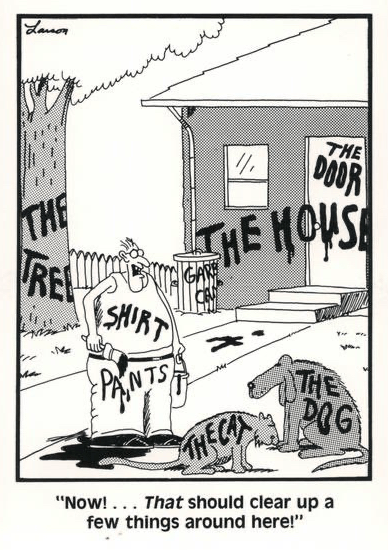
Tuesday, 9 December 2025
- The Real Problem of Humanity ★
-
Sociobiologist Edward O. Wilson, back in 2009:
The real problem of humanity is the following: we have paleolithic emotions; medieval institutions; and god-like technology.
A related adage I heard, and internalized, recently: “We’re not thinking creatures who feel; we’re feeling creatures who think.” (Via Jason Kottke.)
- ProPublica: ‘Trump’s Own Mortgages Match His Description of Mortgage Fraud, Records Reveal’ ★
-
Justin Elliott, Robert Faturechi, and Alex Mierjeski, reporting for ProPublica:
For months, the Trump administration has been accusing its political enemies of mortgage fraud for claiming more than one primary residence. President Donald Trump branded one foe who did so “deceitful and potentially criminal.” He called another “CROOKED” on Truth Social and pushed the attorney general to take action.
But years earlier, Trump did the very thing he’s accusing his enemies of, records show.
In 1993, Trump signed a mortgage for a “Bermuda style” home in Palm Beach, Florida, pledging that it would be his principal residence. Just seven weeks later, he got another mortgage for a seven-bedroom, marble-floored neighboring property, attesting that it too would be his principal residence.
In reality, Trump, then a New Yorker, does not appear to have ever lived in either home, let alone used them as a principal residence.
Frank Wilhoit’s axiom comes to mind: “Conservatism consists of exactly one proposition, to wit: There must be in-groups whom the law protects but does not bind, alongside out-groups whom the law binds but does not protect.”
The difference between traditional conservatism — which hadn’t yet been washed away in 2018, when Wilhoit wrote it — and today’s MAGA Republican cult is that in Trumpism, the in-group is just Trump, and whoever he sees as serving allegiance to him personally. It’s not men, not white people, not rich people, and not even rich white men, as a class. It’s just Donald Trump and those who pay personal fealty to him. Especially rich white men who pay subservient fealty to him.
- The Wall Street Journal: ‘Behind Paramount’s Relentless Campaign to Woo Warner Discovery and President Trump’ ★
-
Joe Flint, Brian Schwartz, and Natalie Andrews, reporting for The Wall Street Journal (gift link, also in News+):
“Just tried calling you about new bid we have submitted,” Ellison texted Zaslav. “I heard you on all your concerns and believe we have addressed them in our new proposal. Please give me a call back when you can to discuss in detail.”
He didn’t hear back.
Sensing trouble, Ellison followed up, saying Paramount had offered a package that covered all the issues Warner had raised, including the need for “strong cash value” and “speed to close.”
“It would be the honor of a lifetime to be your partner and to be the owner of these iconic assets,” he texted, according to a regulatory filing.
Desperation is never a good look.
During a visit to Washington in recent days, David Ellison offered assurances to Trump administration officials that if he bought Warner, he’d make sweeping changes to CNN, a common target of President Trump’s ire, people familiar with the matter said. Trump has told people close to him that he wants new ownership of CNN as well as changes to CNN programming.
Lickspittling is never a good look, either. David Ellison cuts the figure of a pathetic little man, a mere shadow of his father. (I’ll bet he gets along well with Don Jr. and Eric.) And Trump is now already pissed that Ellison hasn’t turned 60 Minutes into Fox and Friends.
- You’ll Never Guess Who Won the Newly Created ‘Peace Prize’ From FIFA, the World’s Most Corrupt Sports Body ★
-
The Guardian:
There on a plinth, with “Donald J Trump” emblazoned on it in capital letters, was the uncoveted trophy: a golden globe resting on five golden hands big enough to compensate any tiny-handed recipient feeling sore about the Nobel peace prize.
But wait, there was more. “There is also a beautiful medal for you that you can wear everywhere you want to go,” added Infantino, knowing that with Trump there is no such thing as too much.
Glowing oranger than usual under the stage lights, Trump eagerly put the medal around his neck without waiting for Infantino to do the honours. He told the audience of 2,000 people: “This is truly one of the great honours of my life.”
It’s just perfect that Trump put the medal around his own neck.
The jokes practically wrote themselves.
- You Can’t Please a Madman ★
-
Donald Trump, on his blog:
The only reason Marjorie “Traitor” Brown (Green turns Brown under stress!) went BAD is that she was JILTED by the President of the United States (Certainly not the first time she has been jilted!). Too much work, not enough time, and her ideas are, NOW, really BAD — She sort of reminds me of a Rotten Apple! Marjorie is not AMERICA FIRST or MAGA, because nobody could have changed her views so fast, and her new views are those of a very dumb person. That was proven last night when washed up, Trump hating, 60 Minutes “correspondent,” Lesley Stahl, who still owes me an apology from when she attacked me on the show (with serious conviction!), that Hunter Biden’s LAPTOP FROM HELL was produced by Russia, not Hunter himself (TOTALLY PROVEN WRONG!), interviewed a very poorly prepared Traitor, who in her confusion made many really stupid statements. My real problem with the show, however, wasn’t the low IQ traitor, it was that the new ownership of 60 Minutes, Paramount, would allow a show like this to air. THEY ARE NO BETTER THAN THE OLD OWNERSHIP, who just paid me millions of Dollars for FAKE REPORTING about your favorite President, ME! Since they bought it, 60 Minutes has actually gotten WORSE! Oh well, far worse things can happen. P.S. I hereby demand a complete and total APOLOGY, though far too late to be meaningful, from Lesley Stahl and 60 Minutes for her incorrect and Libelous statements about Hunter’s Laptop!!! President DJT
Trump’s expectation isn’t that 60 Minutes, along with the entirety of CBS News, along with the entirety of CBS TV programming, would tilt in Trump’s direction after its acquisition (as part of Paramount) by David Ellison’s Skydance. Trump’s expectation is that all of CBS, every minute of the broadcast day, should appeal to and appease him.
- ‘Netflix and the Hollywood End Game’ ★
-
Ben Thompson at Stratechery yesterday:
It’s important to note that the President does not have final say in the matter: President Trump directed the DOJ to oppose AT&T’s acquisition of Time Warner, but the DOJ lost in federal court, much to AT&T’s detriment. Indeed, the irony of mergers and regulatory review is that the success of the latter is often inversely correlated to the wisdom of the former: the AT&T deal for Time Warner never made much sense, which is directly related to why it (correctly) was approved. It would have been economically destructive for AT&T to, say, limit Time Warner content to its networks, so suing over that theoretical possibility was ultimately unsuccessful.
Thompson also makes clear that Paramount itself couldn’t possibly launch a credible bid for Warner Bros.:
Paramount’s bid, it should be noted, was for the entire Warner Bros. Discovery business, including the TV and cable networks that will be split off next year; Netflix is only buying the Warner Bros. part. Puck reported that the stub Netflix is leaving behind is being valued at $5/share, which would mean that Netflix outbid Paramount.
And, it should be noted, that Paramount money wouldn’t be from the actual business, which is valued at a mere $14 billion; new owner David Ellison is the son of Oracle founder Larry Ellison, who is worth $275 billion. Netflix, meanwhile, is worth $425 billion and generated $9 billion in cash flow over the last year. Absent family money this wouldn’t be anywhere close to a fair fight.
It’s not illegal or even sketchy for an acquisition to be backed by family money from an entirely separate source (in the Ellisons’ case, Oracle), but it certainly makes more business sense for Netflix to make this acquisition than Paramount. There’s a strong argument that David Ellison doesn’t really know what the fuck he’s doing in the media racket; no one would argue that Netflix doesn’t know exactly what they’re doing.
- Paramount Skydance Makes Hostile Takeover Bid for Warner Bros. Discovery ★
-
The Wall Street Journal yesterday:
Paramount launched a $77.9 billion hostile takeover offer for Warner Bros. Discovery Monday, taking its case for acquiring the storied entertainment company directly to shareholders just days after Warner agreed to a deal with Netflix.
Paramount, run by David Ellison, is arguing that its all-cash $30-a-share offer for all of Warner, owner of networks such as CNN, TBS and HGTV as well as the HBO Max streaming service, is a better deal for shareholders and more likely to pass regulatory muster.
“We’re really here to finish what we started,” Ellison said on CNBC Monday morning.
The “more likely to pass regulatory muster” bit is a euphemism for the Ellisons (David, and the real player here, his $250+-billion-dollar-net-worth father Larry) being on the inside of the Trump administration oligarchy. It’s so transparent that Trump’s son-in-law Jared Kushner is part of the hostile bid, along with sovereign wealth funds from Saudi Arabia, Abu Dhabi, and Qatar.
That said, while the Executive Branch is influential in such regulatory approvals, it’s not completely under their control. The U.S. court system, while under duress from this administration, remains independent, and with admittedly notable exceptions, remains largely on the up-and-up.
And CNN’s Brian Stelter reports that Netflix was prepared for this:
“Today’s move was entirely expected,” Netflix co-CEO Ted Sarandos said on stage at a UBS conference just now, waving off Paramount’s hostile play for WBD. “We have a deal done, and we are incredibly happy with the deal... We’re super confident we’re going to get it across.”
Monday, 8 December 2025
- Johny Srouji, in Memo Responding to Gurman Report: ‘I Love My Team, and I Love My Job at Apple, and I Don’t Plan on Leaving Anytime Soon’ ★
-
CNBC:
Apple chip leader Johny Srouji addressed rumors of his impending exit in a memo to staff on Monday, saying he doesn’t plan on leaving the company anytime soon. “I love my team, and I love my job at Apple, and I don’t plan on leaving anytime soon,” he wrote.
Bloomberg reported on Saturday that Srouji had told CEO Tim Cook that he was considering leaving, citing people with knowledge of the matter.
It wasn’t rumors, plural. It was one report, on Saturday, from Mark Gurman at Bloomberg, and Srouji just called bullshit on it.
What a colossal fuck-up for Gurman and Bloomberg. There’s no possible scenario where Srouji was threatening to leave Apple for a competitor on Saturday and telling his staff (in a memo meant to leak to the press) “I love my job at Apple, and I don’t plan on leaving anytime soon” Monday morning.
The most gracious interpretation for Gurman and Bloomberg is that Srouji had expressed this to Cook, at some point in the recent past, and Cook addressed whatever it took to keep Srouji on board. But even in that scenario, they ran a story Saturday that was wrong at the time it was published.
The more likely scenario is the one suggested by Neil Cybart:
If someone wanted to sow seeds of doubt among Apple employees in an effort to help their own poaching efforts, there are at least three publications who would have no problem offering an anonymous microphone to that person.
I.e., the source for this story about Srouji being unhappy at Apple and considering leaving for a competitor was aligned with one of those competitors, and Gurman and his editors at Bloomberg said “Sure, we’ll print that.” Meta, of course, is the competitor that comes to mind.
It speaks to Gurman’s personal and Bloomberg’s institutional influence that Srouji and Apple saw the need to shoot the bogus narrative down in public like this. I can’t remember the last time an Apple executive saw the need to send an intended-to-leak memo like this to shoot down one bogus story. After last week, though, this one couldn’t be ignored.
- EU Court Rules That Apple Must Face Dutch Antitrust Lawsuit Regarding App Store Commission Rates ★
-
Juli Clover, writing at MacRumors (regarding a report at Reuters):
Apple could ultimately have to pay up to an estimated 637 million euros to address the damage suffered by 14 million iPhone and iPad users in the Netherlands.
That’s about €45/user.
The lawsuit dates back to 2022, when two Dutch consumer foundations (Right to Consumer Justice and App Store Claims) accused Apple of abusing its dominant market position and charging developers excessive fees. The lawsuit was filed on behalf of Dutch iPhone and iPad users, and it claimed that Apple’s 30 percent commission inflated prices for apps and in-app purchases.
I’m curious what these consumer foundations would consider a “fair” (and thus legal) commission rate.
This all comes back to the argument that Apple’s App Store commission inflates prices. A recent Apple-funded (and Apple-promoted) study suggests this is not true — that with lower commissions mandated by the DMA, prices paid by consumers stayed the same and the difference went to the developers. That’s good if you’re a developer, but it’s not the argument being made by these consumer advocate groups.
That said, I pointed out just the other day that Tiimo, a to-do app that Apple just named as the iPhone app of the year in the 2025 App Awards, charges about 20 percent less for subscriptions on its website compared to its in-app subscriptions. An Apple-funded, Apple-promoted study showing that the App Store’s commissions don’t raise prices ought to be taken with a few grains of salt.
Apple argued that the Dutch court did not have jurisdiction to hear the case because the EU App Store is run from Ireland, and therefore the claims should be litigated in Ireland. Apple said that if the Dutch court was able to hear the case, it could lead to fragmentation with multiple similar cases across the EU, plus it argued that customers in the Netherlands could have downloaded apps while in other EU member states.
I know Apple wants this litigated in Ireland because the Irish government sees Apple as an ally, not an adversary, but it does seem contrary to the idea of a single market if a company doing business in the EU is subject to different antitrust laws from each of the EU’s 27 member states.
Sunday, 7 December 2025
- WorkOS Radar ★
-
My thanks to WorkOS for sponsoring last week at DF. Does your app get fake signups, throwaway emails, or users abusing your free tier? Or worse, bot attacks and brute force attempts?
WorkOS Radar can block all this and more. A simple API gives you advanced device fingerprinting that can detect bad actors, bots, and suspicious behavior. Your users trust you. WorkOS Radar lets you keep it that way.
- Russia Blocks FaceTime and Snapchat ★
-
Dasha Litvinova, reporting for the AP:
Russian authorities said Thursday they have imposed restrictions on Apple’s video calling service FaceTime, the latest step in an effort to tighten control over the internet and communications online. State internet regulator Roskomnadzor alleged in a statement that the service is being “used to organize and conduct terrorist activities on the territory of the country, to recruit perpetrators (and) commit fraud and other crimes against our citizens.” Apple did not respond to an emailed request for comment.
The Russian regulator also announced that it has blocked Snapchat, a messaging app for sharing photos, videos and text messages, citing the same grounds it gave for restricting FaceTime. It said that it took the action Oct. 10 even though it only reported the move on Thursday.
I’m sure the crime rate in Russia will soon plummet. (I’m curious why iMessage isn’t blocked too.)
Update: A DF reader in Russia, who has sent me feedback before, told me that iMessage still works (and in fact told me via iMessage), but that it likely hasn’t been blocked because it isn’t widely used there. (He said that his chat with me is his one and only iMessage thread.) FaceTime, on the other hand, is quite popular in Russia. Or at least it was.
- One Last Note on Tiimo: What’s the Deal With That Icon? ★
-
One small update I just appended to my piece Friday taking a look at the winning apps from this year’s App Store Awards:
Lastly, I have questions — some really hard questions — regarding Tiimo’s app icon. Such as, “What is that?”
Perhaps it got picked because it makes Apple’s new OS 26 icons look good by comparison?

Friday, 5 December 2025
- Dithering: ‘Alan Dye Leaves Apple’ ★
-
Dithering is my and Ben Thompson’s twice-a-week podcast — 15 minutes per episode, not a minute less, not a minute more. It’s a $7/month or $70/year subscription, and included in the Stratechery Plus bundle (a bargain). This year our CMS (Passport — check it out) gained a feature that lets us make some episodes free for everyone to listen to on the website. Today’s episode, regarding Alan Dye leaving Apple for Meta, seems like a good one to do that with. (And, once again, this month’s album art serendipitously captures my mood.)
Give it a listen. Subscribe if you enjoy it.
- Apple’s Succession Intrigue Isn’t Strange at All ★
-
Aaron Tilley and Wayne Ma, in a piece headlined “Why Silicon Valley is Buzzing About Apple CEO Succession” at the paywalled-up-the-wazoo The Information:
Prediction site Polymarket places Ternus’ odds of getting the job at nearly 55%, ahead of other current Apple executives such as software head Craig Federighi, Chief Operating Officer Sabih Khan and marketing head Greg Joswiak. But some people close to Apple don’t believe Ternus is ready to take on such a high-profile role, and that could make a succession announcement unlikely anytime soon, said people familiar with the company.
Nothing in the rest of the article backs up that “some people close to Apple don’t believe Ternus is ready” claim, other than this, several paragraphs later:
And while his fans believe Ternus has the temperament to be CEO, many of them say he isn’t a charismatic leader in the mold of a Jobs. He has also had little involvement in the geopolitical and government affairs issues that dominate most of Cook’s time these days. On a recent trip to China, for example, Apple’s new COO, Sabih Khan, accompanied Cook to some of his meetings.
No one else in the history of the industry, let alone the company, has the charisma of Steve Jobs. And while I think Polymarket has the shortlist of candidates right, I also think they have them listed in the right order. Sabih Khan probably should be considered an outside-chance maybe, but the fact that he accompanied Cook to China doesn’t make me think, for a second, that it’s in preparation to name him CEO. If Khan were being groomed to become CEO, he’d have started appearing in keynotes already. It’s silly to slag Ternus for not having the charisma of Steve Jobs, when Ternus has been a strong presence in keynotes since 2018, and in the same paragraph suggest Khan as a better option, when Khan has never once appeared in a keynote or public appearance representing Apple.
Some former Apple executives hope a dark-horse candidate emerges. For example, Tony Fadell, a former Apple hardware executive who coinvented [sic] the iPod, has told associates recently that he would be open to replacing Cook as CEO, according to people who have heard his remarks. (Other people close to Apple consider Fadell an unlikely candidate, in part because he was a polarizing figure when he worked at the company. Fadell left Apple in 2010.)
The parenthetical undersells the unlikelihood of Fadell returning to Apple, ever, in any role, let alone the borderline insanity of suggesting he’d come back as Cook’s successor.
It has become one of the strangest succession spectacles in tech. Typically, the kind of buzz that is swirling around Cook occurs when companies are performing badly or a CEO has dropped hints that they’re getting ready to hang up their spurs. Neither applies in Cook’s case, though.
There’s nothing strange about it. Apple has a unique company culture, but so too do its peers, like Microsoft, Amazon, and Google. And just like at those companies, it’s therefore a certainty that Cook’s replacement will come from within the company’s current ranks. Polymarket doesn’t even list anyone other than Ternus, Federighi, Joswiak, and Khan.
As for hints, there is not much need for any hint beyond the fact that Cook is now 65 years old and has been in the job since 2011. But the high-profile multi-source leak to the Financial Times is a pretty obvious fucking additional hint.
- Lisa Jackson on The Talk Show Back in 2017 ★
-
This interview was both interesting and a lot of fun. Worth a listen or re-listen.
- Apple Announces a Few Other Executive Transitions ★
-
Apple Newsroom, yesterday:
Apple today announced that Jennifer Newstead will become Apple’s general counsel on March 1, 2026, following a transition of duties from Kate Adams, who has served as Apple’s general counsel since 2017. She will join Apple as senior vice president in January, reporting to CEO Tim Cook and serving on Apple’s executive team.
In addition, Lisa Jackson, vice president for Environment, Policy, and Social Initiatives, will retire in late January 2026. The Government Affairs organization will transition to Adams, who will oversee the team until her retirement late next year, after which it will be led by Newstead. Newstead’s title will become senior vice president, General Counsel and Government Affairs, reflecting the combining of the two organizations. The Environment and Social Initiatives teams will report to Apple chief operating officer Sabih Khan. [...]
Newstead was most recently chief legal officer at Meta and previously served as the legal adviser of the U.S. Department of State, where she led the legal team responsible for advising the Secretary of State on legal issues affecting the conduct of U.S. foreign relations.
Monday’s announcement that AI head John Giannandrea is retiring and the hierarchy for AI related projects being further reshuffled under software head Craig Federighi was significant, but not surprising, given how things went this year for Apple with AI.
Wednesday’s announcement that VP of design and Liquid Glass frontman Alan Dye is leaving Apple for Meta was a shock, both inside and outside the company. As I wrote this week, I think it’s great news for Apple, but not by plan.
This news yesterday is just typical planned retirements. The timing is slightly unfortunate though. In the eyes of observers unfamiliar with the company, they might be misconstrued as signs of executive upheaval, occurring on the heels of the minor and major dramas of Giannandrea’s and Dye’s departures. The Jackson / Adams / Newstead transitions announced yesterday are nothing of the sort.
Jackson had a very nice run at Apple and carved out a rather unique position within the company. Apple’s environmental efforts expanded tremendously under her leadership. I’ve never met anyone with a bad word to say about her, and in my own interactions, found her downright delightful.
As for Adams, the responsibilities of Apple’s general counsel are generally far afield from my interests. The only two times I’ve mentioned her at DF were when she got the job in 2017, and a passing reference when the FBI sent a letter to Apple, addressed to Adams, in 2020 regarding the locked phone of a mass shooter in Pensacola, Florida. That’s a sign of a good run for a general counsel — it’s a job where no news is good news.
Lastly, I wouldn’t read anything into Newstead coming to Apple by way of Meta. But it is a bit funny that it was announced the day after Dye left Apple for Meta. She seems to have an excellent wide-ranging background to spearhead Apple’s government affairs. Her stint in the State Department was during the first (now seemingly sane) Trump administration, but she clerked for liberal Supreme Court Justice Stephen Breyer.
- Netflix Agrees to Buy Warner Bros., Including HBO, for $83 Billion ★
-
Meg James, reporting for The Los Angeles Times (News+ link):
The two companies announced the blockbuster deal early Friday morning. The takeover would give Netflix such beloved characters as Batman, Harry Potter and Fred Flintstone.
Fred Flintstone?
“Our mission has always been to entertain the world,” Ted Sarandos, co-CEO of Netflix, said in a statement. “By combining Warner Bros.’ incredible library of shows and movies — from timeless classics like Casablanca and Citizen Kane to modern favorites like Harry Potter and Friends — with our culture-defining titles like Stranger Things, KPop Demon Hunters and Squid Game, we’ll be able to do that even better.”
Not sure Squid Game belongs in the same comparison as Citizen Kane, but the Warners library is incredibly deep. Stanley Kubrick’s post-2001: A Space Odyssey films were all for Warner Bros.
Netflix’s cash and stock transaction is valued at about $27.75 per Warner Bros. Discovery share. Netflix also agreed to take on more than $10 billion in Warner Bros. debt, pushing the deal’s value to $82.7 billion. [...] Warner’s cable channels, including CNN, TNT and HGTV, are not included in the deal. They will form a new publicly traded company, Discovery Global, in mid-2026.
I don’t know if this deal makes sense for Netflix, but Netflix has earned my trust. Netflix is a product-first company. They care about the quality of their content, their software, their service, and their brand. If you care about the Warner/HBO legacy, an acquisition by Netflix is a much, much better outcome than if David Ellison had bought it to merge with Paramount.
The LA Times article goes on to cite concerns from the movie theater industry, based on Netflix’s historic antipathy toward theatrical releases for its films. Netflix is promising to keep Warner Bros.’s film studio a separate operation, maintaining the studio’s current support for theatrical releases. I hope they do. I grew up loving going to the movies. I still enjoy it, but the truth is I go far less often as the years go on. Movie theaters shouldn’t be a protected class of business just because there’s so much affection and nostalgia for them. If they continue sliding into irrelevance, so be it. That’s how disruption, progress, and competition work.
Thursday, 4 December 2025
- Alan Dye Comments on His Career Move in an Instagram Story ★
-
Straight/dumb quotation marks. Some default Instagram typeface. That period just hanging there, outside the closing quote. This is the post from the man who led Apple’s software design for a decade.
Not to mention the gall to use any quote from Steve Jobs, let alone this particular one, which is enshrined by Apple on the wall outside Town Hall at the old Infinite Loop campus in Cupertino, and provides the title for the splendid book published (in a delightful interactive version on the web, and in gorgeous limited print editions) by the Steve Jobs Archive and LoveFrom.
“Just figure out what’s next” for Alan Dye, after his supposedly wonderful accomplishments at Apple, is ... going to work for Meta? Jiminy H. Christ, that takes stones.
Wednesday, 3 December 2025
- Louie Mantia on The Talk Show in July, Talking About Alan Dye and Liquid Glass ★
-
Back in July, I was lucky enough to have my friend Louie Mantia on The Talk Show to talk about Liquid Glass and (as I wrote in the show notes) “the worrisome state of Apple’s UI design overall”. This was probably my favorite episode of the show all year, and I think it holds up extremely well now that we’re all using Liquid Glass, across Apple’s platforms, in release versions.
Included in the show notes was a link to Mantia’s essay making his case against Dye’s decade-long stint leading Apple’s UI design teams, “A Responsibility to the Industry”, which began thus:
Firstly, I maintain that it makes absolutely no sense that Alan Dye has the power he has, because he simply has no taste. But what’s worse is that he wields that power so clumsily, so carelessly. And because it goes unchallenged, unchecked by someone higher than him, the entire industry suffers the consequences.
Here’s Mantia today, regarding the news of Dye leaving Apple for Meta:
And good riddance!!
- Alan.app ★
-
Tyler Hall, just one week ago:
Maybe it’s because my eyes are getting old or maybe it’s because the contrast between windows on macOS keeps getting worse. Either way, I built a tiny Mac app last night that draws a border around the active window. I named it “Alan”.
In Alan’s preferences, you can choose a preferred border width and colors for both light and dark mode.
That’s it. That’s the app.
The timing of this is remarkably serendipitous — releasing an app named “Alan” to fix an obvious glaring design shortcoming in recent versions of MacOS just one week before Alan Dye left Apple. (See Michael Tsai for more on the app’s name, including a callback to Greg Landweber’s classic Mac OS extension Aaron.)
It’s worth following Hall’s “the contrast between windows” link, which points to his own post from five years ago lamenting the decline in contrast between active and inactive windows in MacOS. That 2020 post of Hall’s refers back to Steve Jobs’s introduction of Mac OS X 10.5 Leopard in 2007:
As I was preparing the above video for this post, I completely forgot there was a final feature about the new Leopard Desktop that was highlighted in that keynote.
Jobs took time out of a keynote to callout that it was now easier to tell which window is focused. At 1:29 in that clip, you’ll hear an outsized “Wooo!” from some of the audience just for this one improvement.
Jobs even prepared a slide, highlighting “Prominent active window” as a noteworthy new feature. In 2007, the increase of visual prominence for the active window, going from 10.4 Tiger to 10.5 Leopard, drew applause from the audience. But the level of visual prominence indicating active/inactive windows was much higher in 10.4 Tiger than in any version of MacOS in the last decade under Alan Dye’s leadership.
Nick Heer on Alan (the app, and, indirectly, the man):
I wish it did not feel understandable for there to be an app that draws a big border around the currently active window. That should be something made sufficiently obvious by the system. Unfortunately, this is a problem plaguing the latest versions of MacOS and Windows alike, which is baffling to me. The bar for what constitutes acceptable user interface design seems to have fallen low enough that it is tripping everyone at the two major desktop operating system vendors.
- Nick Heer Obtained Video of Alan Dye’s Exit From Apple ★
-
That doesn’t look like one of the fancy Mitsubishi traction elevators at Apple Park, but otherwise, this jibes.
- Alan Dye Leaves Apple for Meta, Replaced by Longtime Designer Stephen Lemay ★
-
Mark Gurman, with blockbuster news at Bloomberg:
Meta Platforms Inc. has poached Apple Inc.’s most prominent design executive in a major coup that underscores a push by the social networking giant into AI-equipped consumer devices.
The company is hiring Alan Dye, who has served as the head of Apple’s user interface design team since 2015, according to people with knowledge of the matter. Apple is replacing Dye with longtime designer Stephen Lemay, according to the people, who asked not to be identified because the personnel changes haven’t been announced.
Apple confirmed the move in a statement provided to Bloomberg News.
“Steve Lemay has played a key role in the design of every major Apple interface since 1999,” Chief Executive Officer Tim Cook said in the statement. “He has always set an extraordinarily high bar for excellence and embodies Apple’s culture of collaboration and creativity.”
It sounds like Dye chose to jump ship, and wasn’t squeezed out (as it seems with former AI chief John Giannandrea earlier this week). Gurman/Bloomberg are spinning this like a coup for Meta (headline: “Apple Design Executive Alan Dye Poached by Meta in Major Coup”), but I think this is the best personnel news at Apple in decades. Dye’s decade-long stint running Apple’s software design team has been, on the whole, terrible — and rather than getting better, the problems have been getting worse.

Tuesday, 2 December 2025
- Look How They Massacred My Boy ★
-
Todd Vaziri, on the HBO Max Mad Men fiasco:
It appears as though this represents the original photography, unaltered before digital visual effects got involved. Somehow, this episode (along with many others) do not include all the digital visual effects that were in the original broadcasts and home video releases. It’s a bizarro mistake for Lionsgate and HBO Max to make and not discover until after the show was streaming to customers.
I decided to help illustrate the changes by diving in and creating images that might do better than words. The first thing I noticed is that, at least for season one, the episode titles and order were totally jumbled. The puke episode is “Red in the Face”, not “Babylon”.
So HBO Max not only ruined several episodes by “remastering” the wrong footage, but they both mis-numbered and mis-titled the episodes. Breathtaking ineptitude. Think about it. This is the entire raison d’être — streaming high quality movies and episodic series. That’s the one and only thing HBO Max does. And they have zero care or craft for what they do. They didn’t just do this to any show. They did it to one of the most cinematically beautiful and carefully crafted shows ever made.
Vaziri’s post, as is his wont, is replete with illustrated and animated examples of the mistakes in HBO’s versions compared to the correct originals available from AMC and iTunes. Vaziri notes:
The fun thing about this restoration mistake is that now we, the audience, get to see exactly how many digital visual effects were actually used in a show like “Mad Men”, which most would assume did not have any digital effects component. In this shot, not only were the techs and hose removed, but the spot where the pretend puke meets Slattery’s face has some clever digital warping to make it seem like the flow is truly coming from his mouth (as opposed to it appearing through a tube inches from his mouth, on the other side of his face).
- HBO Max Butchers ‘Mad Men’ in Botched ‘Remastering’ ★
-
Alan Sepinwall, writing for Wired (News+ link in case Wired’s paywall busts your balls):
Last month, HBO Max announced a major new addition to its library. Not only would the streamer be adding Mad Men — a show that HBO execs infamously passed on back when Matthew Weiner was a writer on The Sopranos — but it would be presenting the period drama’s episodes in a new 4K remastering. This would, according to the press release, give “audiences and longtime Mad Men fans the opportunity to enjoy the series’ authentically crafted elements with crisp detail and enhanced visual clarity.”
As it turned out, there was perhaps too much clarity. Not long after the series went live on HBO Max, a screencap began floating around social media from a scene in the Season One episode “Red in the Face,” where Roger Sterling is vomiting in front of a group of horrified Sterling Cooper clients. When it aired — and in the version still available on AMC+ — seven men are onscreen, all of them wearing period-appropriate suits and ties. The HBO Max version, on the other hand, features two men who appear very out of place in 1960: crew members lurking in the background, feeding a hose to create the illusion that actor John Slattery is puking.
It’s not like the crew members are only partially on-screen, or out of focus far in the background. They’re right there. It’s glaringly obvious that no one at HBO Max even watched this. That’s how rotten the culture at Warner Bros. Discovery is. They obtained the rights to one of the greatest TV shows ever made (one that I personally hold alongside The Sopranos as my favorite ever), processed the episodes in some sort of “remastering” that did not need to happen, and didn’t even bother to watch the fucking new versions they produced before putting them on their service for the world to stream.
AMC+ has the entire original series, as originally broadcast, and it looks gorgeous. I bought all seven seasons from iTunes back in the day, and they look as good, if not better, in those versions. David Zaslav — a well-known idiot — should go to prison for this.
- Apple to Resist Order in India to Preload State-Run App on iPhones ★
-
Aditya Kalra and Munsif Vengattil, reporting for Reuters:
Apple does not plan to comply with a mandate to preload its smartphones with a state-owned cyber safety app and will convey its concerns to New Delhi, three sources said, after the government’s move sparked surveillance concerns and a political uproar.
The Indian government has confidentially ordered companies including Apple, Samsung and Xiaomi to preload their phones with an app called Sanchar Saathi, or Communication Partner, within 90 days. The app is intended to track stolen phones, block them and prevent them from being misused.
The government also wants manufacturers to ensure that the app is not disabled. And for devices already in the supply chain, manufacturers should push the app to phones via software updates, Reuters was first to report on Monday. [...]
Apple however does not plan to comply with the directive and will tell the government it does not follow such mandates anywhere in the world as they raise a host of privacy and security issues for the company’s iOS ecosystem, said two of the industry sources who are familiar with Apple’s concerns. They declined to be named publicly as the company’s strategy is private.
The second source said Apple does not plan to go to court or take a public stand, but it will tell the government it cannot follow the order because of security vulnerabilities. Apple “can’t do this. Period,” the person said.
To my knowledge, there are no government-mandated apps pre-installed on iPhones anywhere in the world. I’m not even sure how that would work, technically, given that third-party apps have to come from the App Store and thus can’t be installed until after the iPhone is configured and the user signs into their App Store Apple Account.
The app order comes as Apple is locked in a court fight with an Indian watchdog over the nation’s antitrust penalty law. Apple has said it risks facing a fine of up to $38 billion in a case.
This is another one of those laws like the EU’s DMA, where maximum possible fines are based on a percentage of global revenue. No one in India seems to actually be threatening any such fine, but it’s ludicrous that it’s even possible.
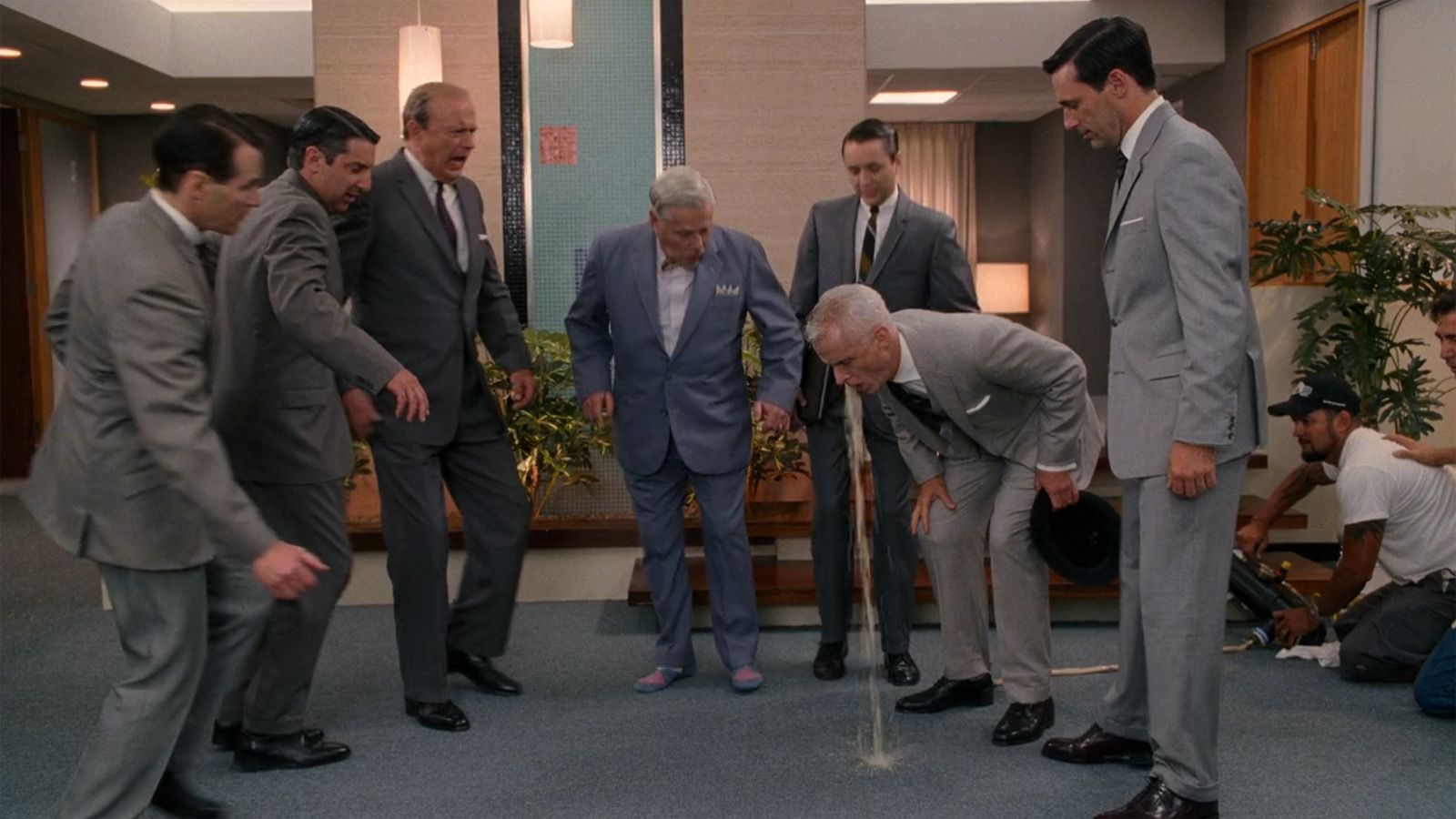
Monday, 1 December 2025
- Gurman Pooh-Poohs Financial Times Report That Tim Cook Is Retiring in First Half of 2026 ★
-
Speaking of Apple executive HR news, in his Power On Bloomberg column last weekend, Mark Gurman pooh-poohed the Financial Times’s recent report that Tim Cook was likely to retire early next year (paywalled, alas, but summarized by MacRumors):
In October, I wrote that the internal spotlight on Ternus was “intensifying,” and that barring unforeseen circumstances he would be the leading candidate. But I didn’t put a date on when a change might happen. Then, around midnight two Fridays ago, the Financial Times published a report with three central claims: Apple is “intensifying” succession planning; Ternus is likely the next CEO; and Cook is expected to step down between late January and June.
The first two points are anything but revelations if you’ve read Bloomberg coverage and Power On, or have simply been paying attention to the realities of Cook’s age and tenure. The timing, however, is another matter entirely. It’s a huge deal that the FT did this: A respected publication should only predict the CEO transition date for a company of Apple’s scale with a high level of confidence — based on people legitimately in the know.
This is where I have concerns. Based on everything I’ve learned in recent weeks, I don’t believe a departure by the middle of next year is likely. In fact, I would be shocked if Cook steps down in the time frame outlined by the FT. Some people have speculated that the story was a “test balloon” orchestrated by Apple or someone close to Cook to prepare Wall Street for a change, but that isn’t the case either. I believe the story was simply false.
They can’t both be right. Either the Financial Times or Bloomberg and Gurman will have a serving of claim chowder no later than June. But as Gurman points out, the only disagreement in their reporting is regarding timing: soon vs. soon-ish.
It could be that we see something like the following next year. Current board chairman Arthur Levinson turned 75 this year, the suggested age limit for Apple Board members. So maybe he rides off into the sunset and Apple names Cook, who already has a seat on the board, executive chairman. Maybe in February, ahead of Apple’s annual shareholder meeting. Then, in the second half of the year, Cook steps down as CEO, Ternus takes the CEO job, and Cook remains chairman of the board for the next decade or so. One change at a time, with a drip-drip series of leaks to trusted business news publications, like the one to the Financial Times last month — seemingly from the board itself — to make none of it come as a surprise.
I don’t think the leak — from multiple sources — to the FT was a “test balloon” (cue John Siracusa on ATP 666 regarding “trial balloon” being the correct idiom). It was more of a “heads up, this is what’s coming”.
- John Giannandrea Is Out ★
-
Apple Newsroom, “John Giannandrea to Retire From Apple”:
Apple today announced John Giannandrea, Apple’s senior vice president for Machine Learning and AI Strategy, is stepping down from his position and will serve as an advisor to the company before retiring in the spring of 2026. Apple also announced that renowned AI researcher Amar Subramanya has joined Apple as vice president of AI, reporting to Craig Federighi. Subramanya will be leading critical areas, including Apple Foundation Models, ML research, and AI Safety and Evaluation. The balance of Giannandrea’s organization will shift to Sabih Khan and Eddy Cue to align closer with similar organizations.
After the fiasco around Apple Intelligence and the “more personalized Siri” features — which were announced at WWDC in June 2024, but postponed until 2026 in a tail-between-their-legs announcement in March 2025 — and the executive reshuffling immediately after that delay was announced that put Mike Rockwell in charge of Siri and moved all or most of Apple Intelligence and Siri under Craig Federighi, it would have been much more surprising if Giannandrea had stayed at Apple. In fact, I’m surprised he wasn’t out before WWDC this past June.
I don’t think we need to wait for additional details to know that he was squeezed out. If, as Mark Gurman reported back in March, “Tim Cook has lost confidence in the ability of AI head John Giannandrea to execute on product development”, why was he still there?
As for Subramanya, according to his LinkedIn profile, he was at Google for 16 years, and left to join Microsoft only five months ago. Either he didn’t like working at Microsoft, or Apple made him an offer he couldn’t refuse (or, perhaps, both).